
Rhynchosia capitata
Rhynchosia capitata
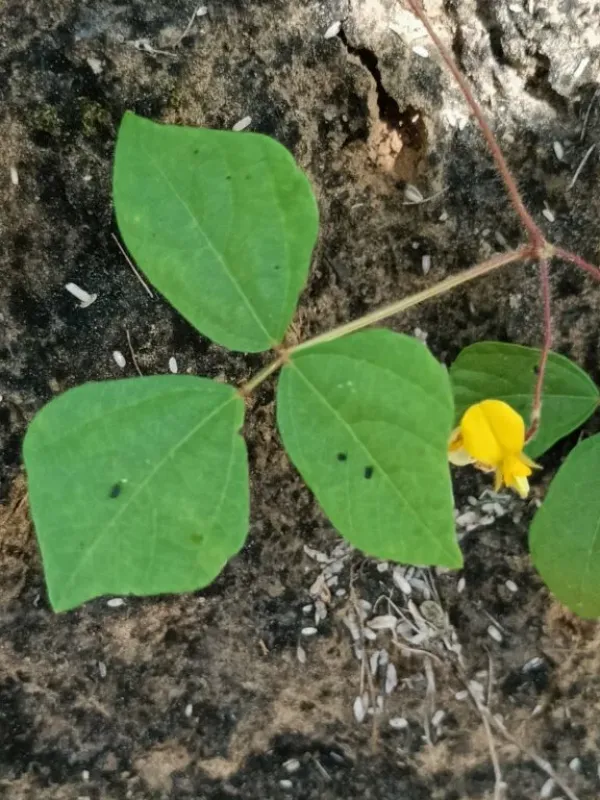
Description
Sowing dates
Rhynchosia capitata is a leguminous plant species within the Fabaceae family. It is increasingly recognized as a resilient crop suitable for cultivation in semi-arid and tropical climates where other legumes might fail.
Sowing schedules are highly dependent on the onset of the rainy season. Adequate soil moisture is essential for initial germination and the development of the primary root system, which allows the plant to withstand later dry spells.
Pre-treatment of seeds, such as scarification, is highly recommended to break dormancy and ensure uniform emergence. Seeds should be sown in rows to facilitate weed management and optimize light interception.
The plant thrives on well-drained sandy loam soils. Heavy, waterlogged soils are detrimental to plant health and should be avoided, as the species is susceptible to root rot in poor drainage conditions.
Integrating Rhynchosia capitata into cropping systems provides significant benefits, primarily due to its capacity for nitrogen fixation. This natural soil enrichment reduces the reliance on synthetic nitrogen fertilizers for subsequent crops.
Growing requirements
Rhynchosia capitata is well-adapted to high-temperature environments. It exhibits notable drought tolerance, making it a robust option for regions with unpredictable rainfall patterns typical of tropical agriculture.
Full sun exposure is a critical requirement for optimal growth. Shaded environments cause etiolation and significantly reduce the total accumulation of biomass and seed yield, which are the main agricultural objectives.
The ideal soil pH ranges from neutral to slightly acidic. The crop is sensitive to saline conditions; therefore, fields must be tested for electrical conductivity prior to large-scale commercial investment.
Weed control is essential during the early establishment phase. Once the canopy closes, the crop effectively shades out competitive weeds, minimizing the need for further manual or mechanical intervention.
Phosphorus supplementation is encouraged during the early development stage to stimulate vigorous root growth and enhance the activity of symbiotic rhizobia, which drive nitrogen fixation processes.
Yield
Biomass production is variable, depending on local rainfall and soil nutrient availability. Under optimal field conditions, the crop produces a significant amount of green matter suitable for animal feed.
Seed yield is heavily influenced by the photoperiod and temperature during the reproductive phase. Effective field management can yield multiple harvests within a single growing season in tropical regions.
The primary agricultural use is as a forage resource for livestock. While the nutritional content is high, farmers should be aware of potential secondary metabolites common in wild leguminous species.
Beyond forage, the plant is a subject of pharmaceutical research due to the presence of specific flavonoids and secondary compounds. This expands its potential value in the agricultural and bio-industrial sectors.
Genetic improvement programs are focusing on selecting lines that show increased protein content and reduced anti-nutritional factors to improve the economic viability of the crop for farmers.
Main diseases and pests
Pest pressure from weevils and various lepidopteran larvae can pose a risk to leaf health. Scout-based pest management is essential to prevent extensive foliage damage during peak vegetative stages.
Fungal diseases, specifically anthracnose and powdery mildew, are prevalent in high-humidity environments. Cultural practices, such as maintaining proper plant spacing to enhance airflow, are the first line of defense.
Viral infections can significantly stunt plant development and reduce crop yields. These pathogens are typically transmitted by sap-sucking insects, emphasizing the need for controlling vector populations.
Root rot remains a major threat when soil drainage is insufficient. Ensuring that the field topography allows for rapid runoff during heavy rains is crucial for long-term survival of the stand.
Seed-borne pests require rigorous post-harvest treatment of seeds if intended for storage or distribution. Fumigation and temperature-controlled storage conditions are standard procedures for high-quality seed maintenance.
Harvesting
Harvesting for biomass should occur at the peak of flowering, prior to full seed development, to maximize the protein density and digestibility of the forage material.
For seed production, harvesting must wait until the pods have turned color and matured. Proper timing is critical to prevent shattering and loss of seeds before mechanical gathering can occur.
Post-harvest processing involves thorough drying in a ventilated area to ensure moisture content remains low, preventing fungal growth during storage. Direct sunlight drying should be monitored to avoid extreme temperatures.
Mechanical harvesting with standard combine harvesters is feasible if the threshing mechanisms are adjusted to minimize impact damage to the seed coat. This preservation ensures high germination rates for future seasons.
Crop residues left after harvest contribute positively to the soil organic matter pool. Incorporating these remains into the soil improves structure and fertility, supporting sustainable agricultural practices for the next crop rotation.