
Rhynchosia bracteata
Rhynchosia bracteata
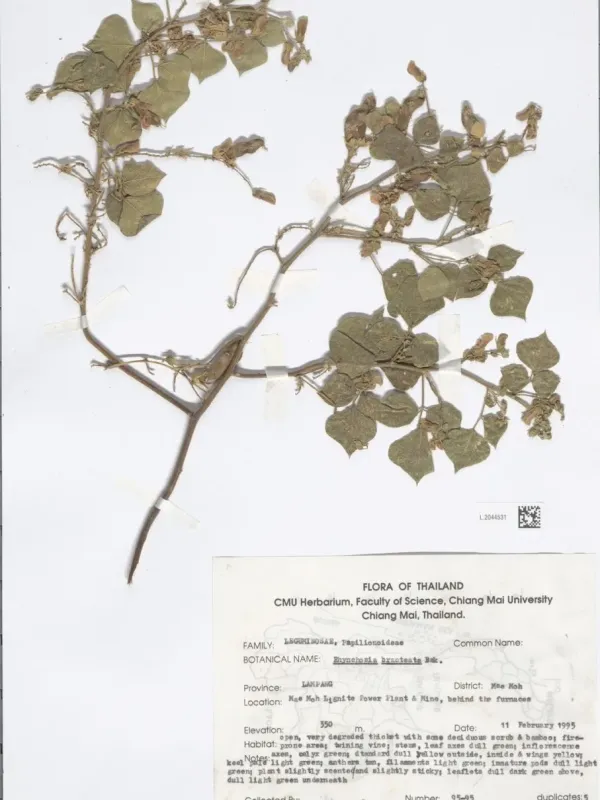
Description
Sowing dates
Rhynchosia bracteata is a perennial leguminous plant belonging to the family Fabaceae. It is native to tropical and subtropical climates, where it thrives as part of the diverse plant community. This species is gaining attention for its potential as a fodder crop and a nitrogen-fixing ground cover.
The sowing process should be initiated when soil temperatures remain consistently above 18 degrees Celsius. Proper seedbed preparation is vital to ensure optimal contact between the seeds and the soil, promoting faster germination and uniform emergence.
Standard seeding rates are determined based on the target crop density. Generally, a depth of 2 to 3 centimeters is sufficient for successful sprouting. Row spacing should be adjusted to allow for adequate airflow between plants to prevent humidity-related issues.
Since the seeds may have a hard coat, physical or chemical scarification is often recommended before planting. This treatment significantly enhances the uniformity of the crop stand, which is crucial for mechanical harvesting.
Successful establishment depends on maintaining soil moisture during the first few weeks. Once the plant develops its primary taproot, it becomes notably more resilient to environmental fluctuations.
Growing requirements
This crop prefers well-drained soils ranging from sandy to loamy textures. It is highly intolerant of waterlogging, which can cause significant damage to the root system and inhibit the growth of nitrogen-fixing nodules.
Sunlight is a primary requirement for the plant's development. It should be grown in open, sunny fields to maximize photosynthetic activity and overall biomass production. Shaded environments are not recommended for commercial cultivation.
Rhynchosia bracteata exhibits excellent drought tolerance, making it an suitable choice for arid regions. However, for maximum productivity, supplemental irrigation during extreme heat waves can be beneficial.
The plant adapts well to low-fertility soils due to its ability to fix atmospheric nitrogen. Despite this, minimal phosphorus and potassium inputs at the flowering stage can enhance seed quality and overall yield.
Temperature sensitivity is a limiting factor. The crop thrives in warm environments and will suffer cold injury if exposed to frost. Growers in temperate zones must treat it as an annual crop or ensure winter protection.
Main diseases and pests
Fungal diseases, particularly leaf spots and mildews, are the most common issues during humid periods. Preventive measures, such as maintaining proper plant spacing and ensuring good field drainage, are essential for mitigation.
Various insects, including pod borers and aphids, can cause significant damage to the foliage and developing seeds. Regular field monitoring is necessary to determine the economic threshold for insecticidal applications.
Root-knot nematodes can pose a threat to the plant's long-term survival. Rotating the crop with non-leguminous plants every few years is the most effective way to break the pest cycle and improve soil health.
Weed management is critical during the seedling phase. Since the plant starts growing slowly, initial weed control is necessary to prevent competition for nutrients and sunlight until the plant canopy covers the ground.
Abiotic stresses, such as high-intensity winds, can occasionally cause lodging. Selecting resilient cultivars or adjusting the sowing density can help maintain the structural integrity of the crop throughout the season.
Harvesting
The harvesting stage is typically determined by the intended use of the crop, whether for fresh fodder, hay, or seed production. For high-quality fodder, harvest should occur before the onset of significant lignification.
When harvesting for forage, multiple cuts can be made throughout the growing season. The plant's ability to regrow from the crown allows for consistent biomass production if managed correctly.
Seed harvesting requires the pods to mature fully on the plant until they become dry and brownish. Harvesting should be performed during dry weather to prevent moisture buildup in stored seeds.
Mechanical harvesting is generally feasible using standard equipment. However, care must be taken to minimize shattering losses if the pods are overly dry and prone to bursting during the cutting process.
Post-harvest handling involves drying the seeds thoroughly to ensure long-term storage stability. Proper ventilation in storage facilities prevents fungal growth and maintains the germination potential of the seed batch.