
Rhynchosia reticulata
Rhynchosia reticulata
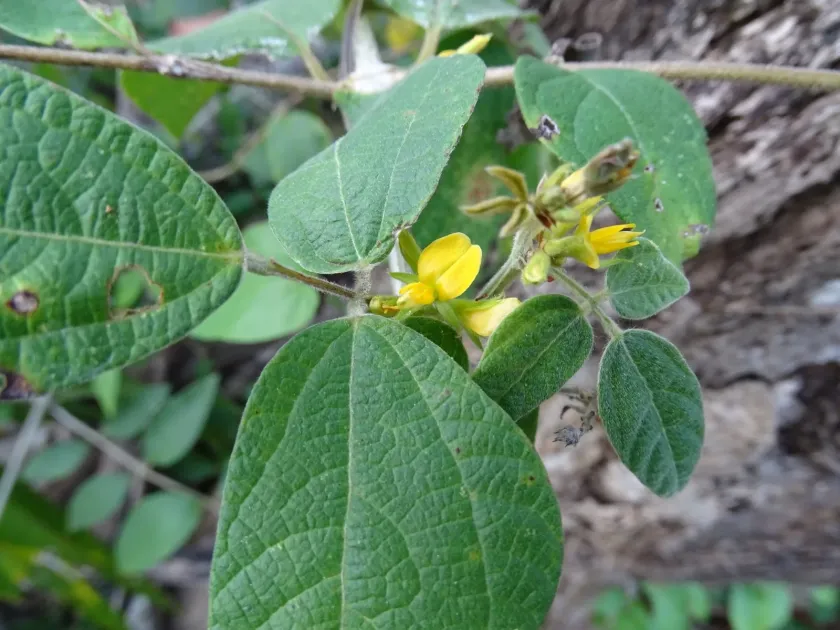
Description
Sowing dates
Rhynchosia reticulata is a robust member of the Fabaceae family that thrives in warm climates, requiring soil temperatures of at least 18–20°C for successful germination.
The optimal sowing time occurs at the onset of the rainy season, which provides the necessary moisture for the rapid establishment of the root system.
Seeds should be planted at a depth of 2 to 4 centimeters to ensure stability while allowing the seedlings to emerge efficiently through the soil layer.
When grown for forage or ground cover, a row spacing of 40–50 centimeters is typically recommended to allow for sufficient air circulation between plants.
It is often beneficial to perform seed scarification before planting to increase the rate of absorption and ensure a uniform germination across the field.
Growing requirements
This crop prefers well-drained, fertile soil, ranging from sandy loams to clay loams, as it is highly sensitive to waterlogged conditions that can impede root health.
Being a heliophilous species, Rhynchosia reticulata requires full sun exposure to reach its peak biomass production and maintain vigorous plant health.
The plant demonstrates significant tolerance to short-term drought, making it a reliable option for regions with seasonal variability in rainfall patterns.
Maintaining a neutral to slightly acidic soil reaction is essential to support the symbiotic relationship between the plant roots and nitrogen-fixing bacteria.
While the plant is hardy, it is susceptible to frost and should be cultivated in environments where year-round temperature levels remain above freezing.
Main diseases and pests
Common agricultural threats include leaf-feeding insects, such as beetles and caterpillars, which can cause severe defoliation if left unchecked.
Fungal pathogens like powdery mildew may arise if humidity remains consistently high, particularly in crowded or poorly ventilated stands.
Root-knot nematodes can occasionally affect the plant in sandy soils, reducing its ability to efficiently acquire water and essential soil nutrients.
Integrated pest management, including the use of trap crops and biological controls, is highly recommended to manage these threats sustainably.
Crop rotation protocols should be strictly observed to break the lifecycle of soil-borne pests and maintain overall soil fertility and structure.
Harvesting
Harvesting for forage purposes is best conducted at the early flowering stage, as this ensures the optimal balance between biomass volume and crude protein content.
For seed production, harvesting should be done once the pods are fully dry and firm, but prior to natural dehiscence to avoid significant shattering losses.
Mechanical harvesting equipment should be calibrated precisely to reduce the impact forces on the seeds, preventing damage to the seed coat.
Any post-harvest residues serve as excellent green manure, contributing organic matter and biologically fixed nitrogen back into the soil ecosystem.
Properly processed seeds must be dried to a moisture content of approximately 10–12% before long-term storage in climate-controlled environments.