
Rhynchosia resinosa
Rhynchosia resinosa
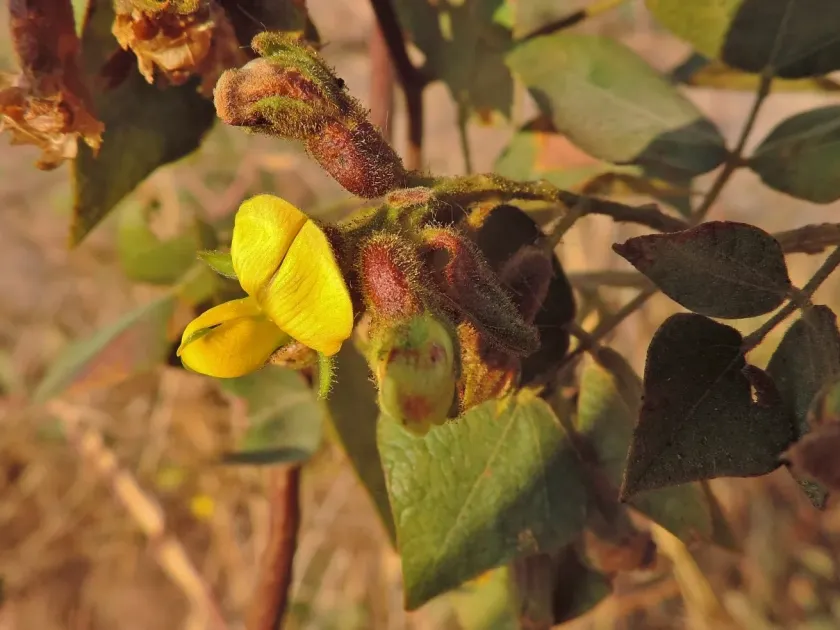
Description
Sowing dates
Sowing of Rhynchosia resinosa should be conducted during the period when stable, warm temperatures are established, typically when the soil has warmed to 18–20 degrees Celsius. Due to a tough seed coat, seeds require pre-sowing scarification to significantly improve germination energy under field conditions.
The optimal planting depth is 2–3 centimeters, depending on the soil structure and moisture levels. Excessive planting depth may result in delayed emergence or seedling failure due to the exhaustion of internal energy reserves within the seed before reaching the soil surface.
The sowing pattern is chosen based on the intended use, although a wide-row method with 45–60 centimeter spacing is generally preferred. This ensures sufficient space for the development of a robust root system and reduces intraspecific competition for moisture.
In arid regions, where this crop performs best, it is recommended to complete the sowing process by soil compaction to facilitate capillary moisture movement toward the seeds. This step is critical for ensuring uniform stand establishment during periods of low rainfall.
Following planting, fields must be kept free of weed competition, as Rhynchosia is known for its slow initial growth rate. Mechanical inter-row cultivation helps control weeds while improving soil aeration, which stimulates nitrogen-fixing nodule activity.
Growing requirements
Rhynchosia resinosa is a perennial herbaceous plant belonging to the Fabaceae family, characterized by high adaptability to arid climatic conditions. Its natural habitat includes the dry regions of Africa, where it thrives in savannas and rocky slopes, displaying remarkable resilience to prolonged drought periods.
The plant prefers well-drained, light-textured soils, including sandy and loamy-sand substrates. This crop reacts negatively to waterlogging and poor drainage, so choosing sites with a low water table is a prerequisite for successful vegetation.
As a light-loving species, Rhynchosia requires open, well-illuminated areas for optimal growth. Even minimal shading from trees or taller neighboring crops can lead to etiolated stems and a sharp decline in overall biomass production.
The temperature regime is demanding; the plant thrives during hot seasons and ceases growth when temperatures drop significantly. Its high heat tolerance makes it a promising component for crop rotation systems in areas that are unsuitable for traditional legume species.
In soils where legumes have not been cultivated previously, it is highly recommended to inoculate seeds with specific rhizobial strains. This promotes the formation of active symbiotic nodules, which provide the plant with biological nitrogen, reducing the need for chemical fertilizers.
Yield
The productivity of Rhynchosia resinosa depends heavily on sunlight exposure and moisture availability during the active growing season. The crop is capable of providing multiple cuts per season if supplemented with irrigation or sufficient rainfall, ensuring a stable supply of green biomass.
The nutritional value of Rhynchosia dry biomass is comparable to other forage legumes, with an added advantage of resinous compounds that provide resistance to grazing and damage by wild animals. High protein content makes it a valuable component for high-quality hay production.
While average yield figures for green mass vary, the crop demonstrates excellent regenerative capacity after cutting when grown under optimal agronomic practices. This allows for flexible use, ranging from pasture grazing to the production of silage or haylage.
Of particular importance is Rhynchosia's ability to maintain green foliage during summer depressions when other grasses wither. This trait provides livestock producers with high-quality fodder during critical times of the year, preventing nutrient deficiencies in animals.
Peak productivity is achieved during the second and third years after sowing, once the root system has fully established itself in the soil profile. Continued management requires adherence to proper cutting intervals to avoid depleting the plant's stored nutrient reserves.
Main diseases and pests
Rhynchosia resinosa possesses natural resistance to many pathogens common to legumes, likely due to the presence of specific resins in its tissue. However, during periods of high humidity, outbreaks of fungal diseases affecting the leaf apparatus can occur.
Potential pests include various leaf-chewing insects, such as lepidopteran larvae and weevils. Damage is usually localized and rarely requires the application of systemic pesticides, provided that proper crop rotation and farm hygiene are maintained.
Waterlogged soil conditions can lead to root rots caused by soil-borne pathogens of the Fusarium genus. Symptoms typically manifest as leaf yellowing, wilting of individual stems, and the death of root hairs, which can eventually result in the plant's decline.
Weeds pose the greatest threat to the crop only during its first year. In subsequent years, the robust growth habit of Rhynchosia allows it to successfully compete for resources, effectively suppressing annual weeds within its growing area.
To prevent the spread of diseases and pests, it is recommended to maintain spatial isolation from other legume crops and ensure the timely removal of plant debris after the season ends. Regular field scouting allows for the early detection and management of potential issues.
Harvesting
Harvesting Rhynchosia for hay should be performed during the mass flowering phase, when the biomass reaches its peak nutritional value and leafiness. This period provides the ideal balance between crude protein content and the total mass of the forage obtained.
For the production of high-quality silage or haylage, mowing is best conducted during the morning hours after the dew has evaporated. Using modern forage harvesting machinery allows for rapid processing of the material, creating optimal conditions for fermentation or drying.
When used as pasture, a rotational grazing system should be implemented to prevent overgrazing to the crown level. After grazing, the area must be allowed a rest period to recover its above-ground biomass.
Rhynchosia seeds mature unevenly, which complicates mechanized harvesting. In seed production fields, hand-harvesting or specialized combines with low-speed threshing drums are used to prevent mechanical injury to the seeds.
Storage of harvested hay requires a dry and well-ventilated facility. Due to the plant's specific resinous secretions, it is essential to monitor moisture content closely to avoid spontaneous heating or spoilage by mold growth.