
Precatory bean
Rhynchosia phaseoloides
Description
Growing requirements
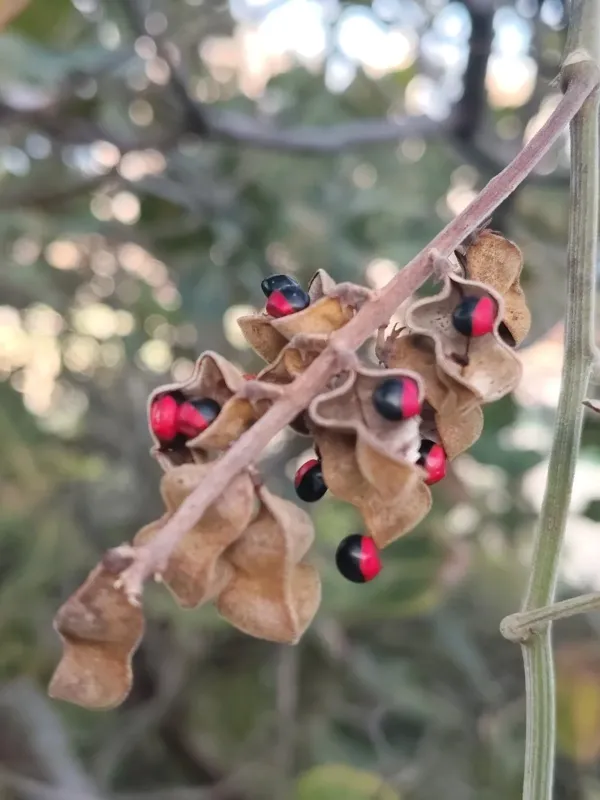
Rhynchosia phaseoloides, commonly known as the precatory bean, belongs to the Fabaceae family. This perennial climbing legume is native to the tropical regions of the Americas and is recognized for its unique seed morphology.
The crop thrives in well-drained, nutrient-rich soils with a pH level ranging from 6.0 to 7.0. It demonstrates a significant preference for areas with high solar radiation and consistent thermal energy throughout the year.
Cultivation success depends on maintaining stable temperatures above 20 degrees Celsius. As a tropical species, it cannot withstand freezing conditions and requires protection in cooler climates.
Agricultural management involves providing sturdy vertical support systems, such as trellises, to facilitate the vigorous climbing growth habit of the plant.
The plant is highly valued for its ability to fix atmospheric nitrogen, contributing to soil health and providing organic fertilization for subsequent crops in a rotation system.
Main diseases and pests
Pathogen pressure is primarily concentrated on fungal diseases resulting from high humidity and insufficient air circulation within the plant canopy.
Insect pests include various defoliators and sap-sucking species that can reduce photosynthetic capacity and overall crop vigor during the primary growth stages.
Integrated Pest Management (IPM) strategies are highly recommended to balance the health of the plant while maintaining the ecological safety of the surrounding environment.
Effective management includes regular field scouting and the strategic removal of infected plant debris to minimize the risk of inoculum carryover.
Chemical treatments should be used with caution, prioritizing biological controls and systemic pesticides that have low toxicity to beneficial pollinator species.