
Rhynchosia penteri
Rhynchosia penteri
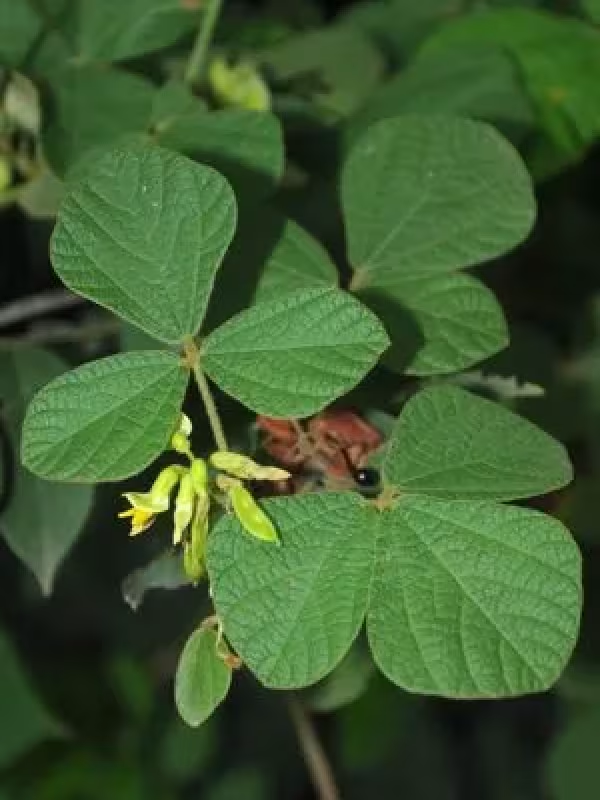
Description
Growing requirements
Rhynchosia penteri is a member of the Fabaceae family, recognized for its role in nitrogen fixation and its potential as a forage or cover crop. Native to tropical regions, this plant has adapted to survive in environments where soil nutrient availability is often limiting.
The cultivation of this crop requires well-drained soil, as the plant is highly susceptible to root rot caused by stagnant water. Sandy loams are considered ideal, providing both the necessary structure for root development and adequate drainage capacity.
Climatic requirements are focused on warm temperatures, typically ranging between 22°C and 30°C. Rhynchosia penteri does not tolerate frost, which dictates that its cultivation is primarily restricted to tropical and subtropical agro-climatic zones.
For optimal growth, the crop requires full sunlight exposure. While it exhibits drought tolerance once established, consistent moisture during the early seedling stage is crucial for ensuring uniform stand establishment across the field.
Agricultural management should prioritize the presence of specific rhizobial strains in the soil. Inoculation practices ensure that the plant maximizes its symbiotic potential, significantly improving soil fertility and reducing the need for synthetic nitrogen fertilizers.
Main diseases and pests
Fungal pathogens such as Fusarium and Rhizoctonia pose a significant threat, especially during seasons with excessive rainfall. Proper field drainage is the most effective cultural method to prevent the spread of these soil-borne diseases.
Insect pests, including aphids and pod borers, can impact both vegetative growth and seed yield. Regular scouting and the application of integrated pest management (IPM) strategies are essential to maintain crop health throughout the season.
Nematodes are a persistent concern in many tropical regions where this crop is grown. Rotating Rhynchosia penteri with non-host crops is a recommended practice to break the life cycle of these underground pests.
Weed competition during the first four to six weeks of growth can severely inhibit development. Timely cultivation or the use of mulch can significantly reduce competitive pressure and improve total biomass production.
Viral diseases transmitted by insect vectors can affect plant vigor. Maintaining a healthy crop environment and controlling vector populations are critical steps for long-term successful production of this legume species.