
Rhaponticum uniflorum
Rhaponticum uniflorum
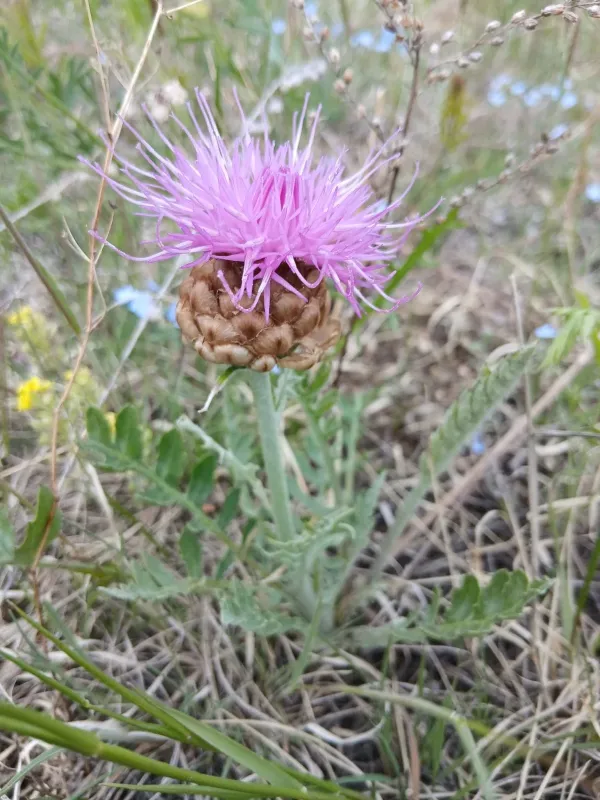
Description
Sowing dates
Rhaponticum uniflorum is a perennial plant of the Asteraceae family widely valued for its medicinal properties. Successful cultivation starts with seed stratification, which is essential for uniform germination in spring.
The optimal sowing time is late autumn, allowing for natural cold stratification during winter, or early spring. Seeds should be planted at a depth of 1–2 cm into well-prepared, loose soil to ensure good contact and moisture retention.
In the first year, the crop develops slowly, focusing mainly on establishing a sturdy basal rosette of leaves. Weed control during this stage is critical, as young plants cannot compete with aggressive weeds for nutrients and light.
Rows should be spaced approximately 50 to 60 cm apart, which facilitates mechanical weeding and cultivation. This spacing also provides sufficient room for the plant to develop its robust root system over the coming years.
The planting density is typically maintained at about 8–10 plants per linear meter. This density ensures that the crop maintains high biomass production without excessive crowding that could lead to poor ventilation and disease.
Growing requirements
This species thrives in open, sunny locations as shade significantly reduces the concentration of beneficial secondary metabolites in the roots. It exhibits excellent cold hardiness, making it suitable for regions with harsh winter climates.
Fertile loamy soils or chernozems with a neutral pH provide the best environment for Rhaponticum uniflorum. Good drainage is paramount, as the plants are highly susceptible to root decay if water accumulates in the root zone.
Incorporating organic matter such as well-rotted compost during soil preparation is highly recommended for vigorous growth. Supplementing with potassium and phosphorus-based mineral fertilizers can significantly enhance root structure and vigor.
Although the plant is drought-tolerant once established, regular irrigation is necessary during the first two years. Maintaining adequate soil moisture during the growing season is crucial for maximizing the development of the rhizomes.
The ideal temperature range for growth is between 18 and 25 degrees Celsius. Extreme heat, particularly when combined with low soil moisture, can lead to premature leaf wilting and stunted biomass accumulation.
Yield
The commercial yield of Rhaponticum uniflorum is primarily assessed based on the weight of the harvested dried roots. By the third year of growth, growers can expect an average yield of 15–20 decitonnes of dried roots per hectare.
The accumulation of ecdysteroids, the main active compounds, peaks toward the end of the third growth cycle. Therefore, harvest planning is usually focused on this three-year production cycle to achieve the highest pharmacological quality.
Above-ground biomass can also be harvested annually, though this requires careful management and additional nitrogen fertilization to support recovery. Average yields for green mass range between 50 and 70 decitonnes per hectare.
The productive lifespan of a plantation is typically around five years, after which yields usually begin to decline. Rotating crops to new fields helps manage soil fertility and prevents the buildup of soil-borne pathogens.
The final product quality is strictly evaluated based on the active ingredient concentration. Proper handling post-harvest is essential to maintain the integrity of these bioactive compounds for medicinal use.
Main diseases and pests
Wireworms represent a significant threat to young plants, as they target the root system, potentially causing severe damage. Soil treatment before planting is a common preventive strategy to reduce pest impact.
Excessive soil humidity can lead to root rot and fungal infections, particularly in poorly drained fields. Maintaining optimal moisture levels and ensuring good air circulation are key preventive measures for plant health.
Leaf-eating insects, such as certain species of moth larvae, can damage the foliage during the summer months. Monitoring the plantation regularly allows for early detection and intervention using eco-friendly biological control agents.
Powdery mildew may occur during seasons with high humidity and limited airflow. The use of systemic fungicides, applied strictly according to safety regulations, can manage this disease without compromising the safety of the crop.
Weed management remains the most persistent challenge in the early years of cultivation. Manual or mechanical weeding between rows is necessary to prevent the crop from being overshadowed and stunted by competitive vegetation.
Harvesting
The harvest of rhizomes is typically carried out in autumn once the vegetative growth has ceased. Machinery is used to lift the roots from a depth of approximately 30 cm, ensuring minimal physical damage to the plant material.
Once extracted, the roots must be thoroughly cleaned of soil and debris. Washing in cold, running water is the standard procedure, ensuring the roots are cleaned quickly to avoid unnecessary leaching of active substances.
Initial drying is often done by wilting the roots in the shade on racks. This step facilitates the subsequent process of chopping the roots into uniform pieces, which improves the efficiency of the final drying stage.
Final drying should occur in controlled environments with temperatures not exceeding 50 degrees Celsius. Maintaining this temperature threshold is vital to preserve the thermal-sensitive compounds found within the roots.
Storage should be conducted in dry, well-ventilated, and cool warehouses. Keeping the product protected from direct sunlight and moisture is essential to prevent degradation and maintain the shelf-life of the dried herbal material.