
Maral root
Rhaponticum carthamoides
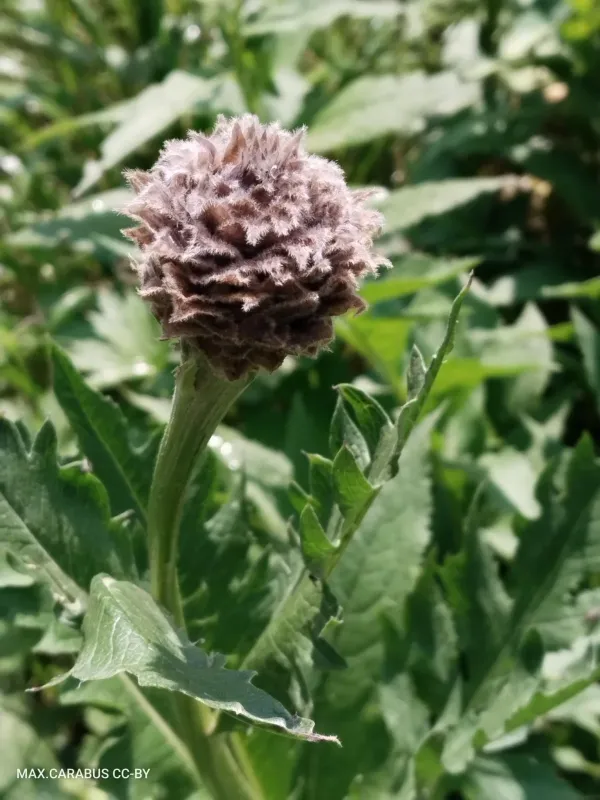
Description
Sowing dates
Maral root is a perennial herbaceous plant from the Asteraceae family. Its seeds are typically sown in early spring or late autumn to allow for successful germination during the growth season.
Autumn sowing is highly effective as it facilitates natural stratification of the seeds, which significantly improves the vigor of the seedlings once spring arrives.
Seeds should be planted at a depth of 1 to 2 centimeters. Ensuring proper soil moisture and contact between the seed and soil is essential for achieving uniform and rapid emergence.
For large-scale cultivation, farmers prefer a wide-row sowing pattern. This method allows for efficient mechanical weeding and nutrient management between the rows.
During the first year, the plant develops slowly. Consequently, controlling weeds during the initial months is vital to prevent young plants from being outcompeted.
Growing requirements
Maral root is native to mountainous regions and is highly resistant to cold temperatures, making it a hardy crop for temperate and cold climates.
The plant thrives in fertile, well-drained soils with a neutral or slightly acidic pH. Avoiding heavy clay soils that retain excess moisture is crucial to prevent root rot.
Proper light exposure is a critical requirement for this species. It prefers open, sunny areas to optimize the production of active biological compounds within its root system.
Although it is a drought-tolerant plant once established, consistent water management during the early stages of growth ensures higher biomass and root development.
Nutrient-rich soils benefit from organic compost or balanced fertilizers, which support the plant's long-term productivity and ensure high-quality medicinal output.
Yield
Harvesting the roots for commercial purposes typically occurs during the third or fourth year, which is when the active components are at their peak concentration.
Yields of dried roots can reach 15 to 30 centners per hectare under optimal conditions, depending on the fertility of the soil and the level of agricultural management.
Regular maintenance, including thinning and irrigation, ensures that the roots develop uniformly, which simplifies the mechanical harvesting process at the end of the cycle.
The green biomass of the plant is also valuable, often used in livestock feed programs due to its high nutrient content and potential as a natural adaptogen.
Crop rotation is recommended to maintain soil health; fields should be kept free from the plant for at least five years before replanting to prevent soil fatigue.
Main diseases and pests
While the plant is quite resilient, it can be vulnerable to soil-borne pests like wireworms and larvae of the May beetle, which attack the young, tender roots.
Fungal diseases, such as powdery mildew or various forms of root rot, are the most frequent threats, especially in areas with poor drainage or high humidity.
Integrated pest management, including regular soil cultivation and the removal of wild host plants, is the most effective way to prevent these agricultural issues.
Adequate plant spacing is necessary to allow for proper air circulation, which significantly reduces the risk of fungal outbreaks in dense, high-yield fields.
Chemical control should be used sparingly and only as a last resort to ensure that the medicinal quality of the harvested roots remains uncompromised.
Harvesting
Harvesting usually takes place in late autumn after the foliage has died back, signaling that the plant has stored maximum energy in its subterranean structures.
Mechanical diggers are used to extract the roots from the earth. Once collected, they must be thoroughly washed to remove all soil particles before processing begins.
Drying is performed in controlled environments at temperatures ranging from 50 to 60 degrees Celsius to preserve the integrity of the bioactive compounds.
Once dried, the roots must be stored in cool, dry, and dark conditions to maintain their potency for up to three years without significant loss of efficacy.
Proper documentation and quality testing of the dried raw material ensure that the final product meets the standards required for the pharmaceutical or supplement industries.