
Randia spinifex
Randia spinifex
Description
Sowing dates
Propagation of this culture in its natural habitat occurs mainly through seeds that mature in the fruits after the flowering period concludes. For agricultural cultivation, seeds should be sown in prepared substrate at the end of the rainy season, which ensures optimal humidity for germination.
When using cuttings, which is the preferred method for maintaining varietal characteristics, young shoots are placed in light sandy-peat soil. Cuttings require the maintenance of a stable temperature of no less than 22-25 degrees Celsius for successful rooting.
An important condition for sowing is the use of freshly harvested seeds, as their germination rate drops rapidly during prolonged storage. Seeds should be sown to a depth of no more than one centimeter and covered with a thin layer of humus.
Initial seedlings require shading from direct sunlight during the first two months of life. The use of root system growth stimulants allows for accelerating the development of seedlings at the initial stage.
Once the seedlings reach a height of 15-20 centimeters, they should be hardened off before being transplanted to their permanent growing location in open ground.
Growing requirements
Randia spinifex belongs to the Rubiaceae family and naturally grows in the tropical forests of the Caribbean and Central America. The plant prefers sunny, well-lit areas with protection from strong cold winds.
For successful development, the culture requires fertile, loamy or sandy-loam soils with a neutral or slightly acidic pH level. It is important to ensure good drainage, as water stagnation in the root zone can lead to the development of fungal infections.
The plant has high resistance to short drought periods, however, for abundant flowering, regular watering is required during the active growth phase. In conditions of moisture deficiency, the shrub may shed its leaves.
The optimal temperature for growth is 20-30 degrees Celsius. The culture is extremely sensitive to frost and does not tolerate temperatures below freezing, which limits its cultivation area to subtropical zones.
As an agrotechnical practice, annual application of complex organic fertilizers in the root zone in early spring is recommended. This promotes the formation of a dense crown and abundant fruiting.
Yield
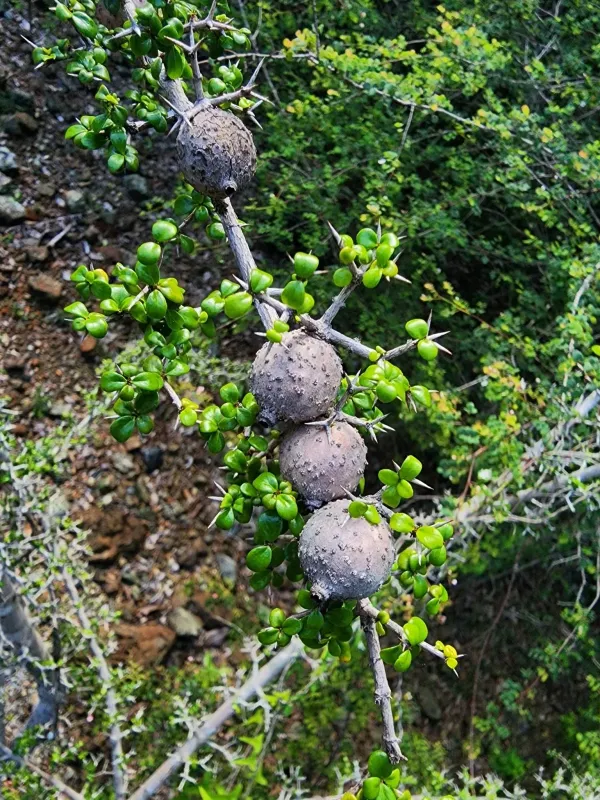
The economic use of Randia spinifex is most often associated with the creation of dense hedges due to the presence of prominent thorns on the shoots. This property makes the culture an excellent natural barrier for protecting plots of land.
The fruits of the plant contain saponins and other biologically active compounds, which traditionally find application in regional folk medicine. Research into their pharmacological potential is ongoing.
In ornamental gardening, the white fragrant flowers, which attract a variety of pollinating insects, are highly valued. Fruit yield depends on light intensity and the quality of care during the ovary formation period.
The wood of the shrub is distinguished by its high density and hardness, allowing it to be used in the artisanal production of small crafts or tools. However, the species does not have significant industrial importance.
Randia spinifex fruits are rarely used in the food industry, as they possess a specific taste and texture that requires special processing to neutralize bitterness.
Main diseases and pests
The main threats to the culture are related to infestations by pests from the Hemiptera order, such as scale insects and mealybugs. These insects suck sap from young shoots, weakening the plant's immune system.
High air humidity combined with poor crown ventilation often provokes the development of powdery mildew. The first signs are a white coating on the leaves, which requires immediate fungicide treatment.
Root rots are the most dangerous diseases when watering practices are violated. Upon detecting signs of wilting, it is necessary to normalize the soil drainage level.
To combat pests, the use of systemic insecticides is recommended, as they effectively affect sucking insects without damaging the plant's tissues.
Disease prevention consists of regular pruning of dense shoots, which ensures air circulation within the crown and reduces the risk of fungal infection hotspots.
Harvesting
The harvest of fruits, if intended for cultivation purposes, is carried out after full maturation when the outer shell acquires a characteristic color. Usually, this period occurs in autumn or early winter.
Fruits are carefully cut with pruning shears, being mindful not to damage the sharp thorns on the branches. The use of protective gloves during harvesting is a mandatory safety condition.
The harvested crop must be dried in a ventilated room at a low temperature. This prevents fruit rot and preserves their medicinal properties.
When using seed material for breeding, seeds are extracted from the pulp, thoroughly washed of juice residue, and dried in paper bags in a dark place.
After harvest, sanitary pruning of the shrub is performed, involving the removal of dry branches and the application of fertilizers to prepare the plant for the dormant period.