
Randia armata
Randia armata
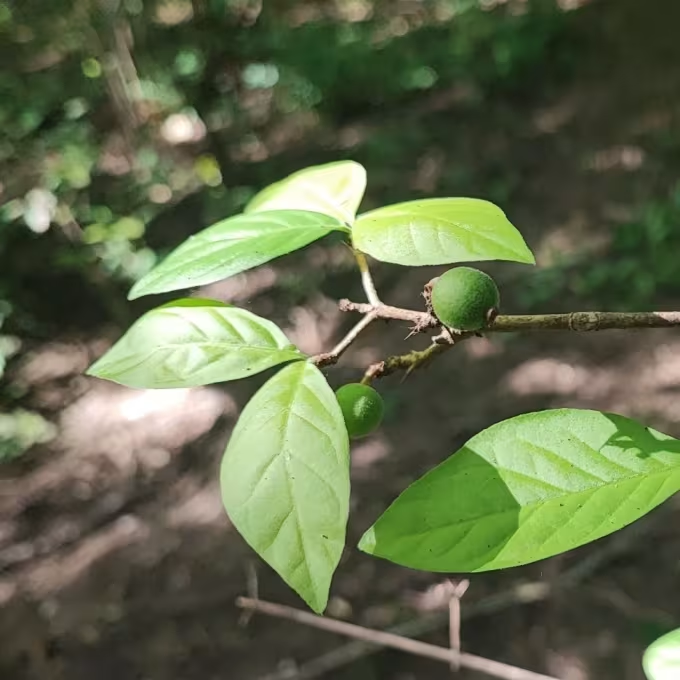
Description
Growing requirements
Randia armata is a prominent member of the Rubiaceae family, commonly found in the tropical regions of the Americas. It is typically classified as an evergreen shrub or a small tree characterized by its formidable, sharp spines that provide a natural defense mechanism against herbivores.
The plant thrives in tropical climates where the temperature remains consistently high throughout the year. It requires well-draining soil rich in organic matter to support its vigorous vegetative growth. In its native habitat, it often populates the edges of forests and secondary growth areas.
Botanically, it features simple, opposite leaves with a glossy texture and fragrant, white flowers that bloom intermittently. These flowers are essential for attracting local insect pollinators, which is critical for the reproduction of the species within its natural ecosystem.
Agricultural success with Randia armata depends on mimicking its native environment. It requires moderate sunlight, high humidity, and protection from strong, drying winds. It does not tolerate frost, making its cultivation area strictly confined to tropical or controlled greenhouse conditions.
From an economic standpoint, the plant is valued for its hard, resilient wood and its role in traditional ethnomedicine. Additionally, its dense branching pattern and defensive spines make it an excellent choice for creating impenetrable natural borders or living fences in rural agricultural landscapes.