
Randia aculeata
Randia aculeata
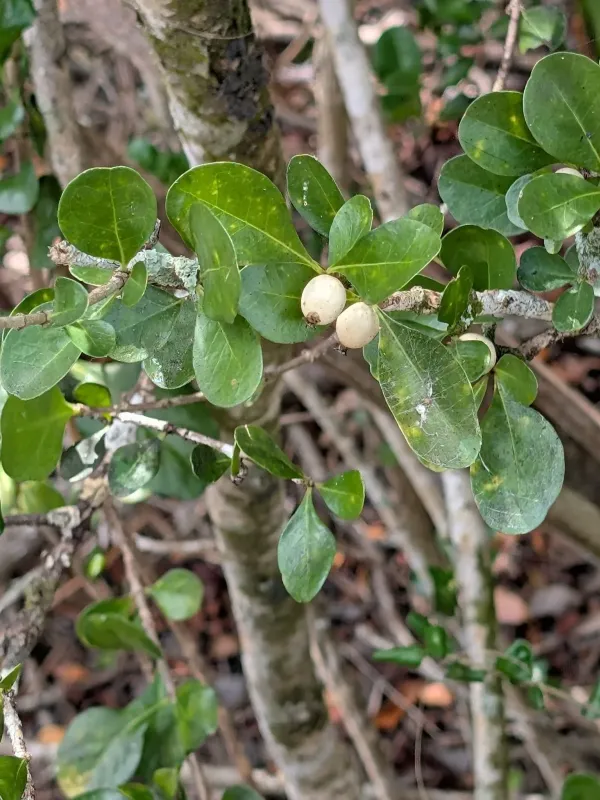
Description
Growing requirements
Randia aculeata, commonly known as the indigo berry or box briar, is an evergreen shrub or small tree belonging to the Rubiaceae family. This species is native to the tropical regions of the Americas, including the Caribbean, Central America, and Southern Florida.
The plant thrives in well-drained, limestone-based, or sandy soils. It is highly valued in its native habitats for its ability to withstand salty coastal winds, making it a robust candidate for seaside landscaping and erosion control.
Climatically, the species requires warm temperatures and high levels of ambient humidity to reach its full development. It is strictly a frost-sensitive plant, meaning it must be protected or grown indoors in regions with colder temperate conditions.
Regarding light requirements, Randia aculeata prefers bright, direct to partial sunlight. Adequate light exposure is essential for maintaining the density of its foliage and for the development of its characteristic white, fragrant flowers.
Proper agronomic practice involves consistent watering during the growing season while ensuring the soil does not become waterlogged. A balanced fertilizer applied in early spring helps to boost new vegetative growth and maintains the plant's health.
Yield
The primary horticultural application of this plant is in landscape design, where it is utilized for creating impenetrable hedges. Its sharp, stiff thorns provide a natural security barrier that is highly effective for property borders.
Historically, the fruits of Randia aculeata were gathered for the production of blue and black dyes. While not a major commercial crop today, the plant remains a point of interest for ethnobotanical studies regarding traditional natural colorants.
In terms of economic potential, the species is increasingly marketed in nursery production for its low-maintenance requirements in tropical landscapes. It is favored for its slow, controllable growth rate and aesthetic appeal.
Beyond its decorative use, the plant contributes to local biodiversity by providing habitat and food for specific pollinators and bird species within its native range, supporting ecological health in managed landscapes.
The fruit, though edible, is rarely consumed as a primary food source, yet its presence adds ornamental value to the plant during the fruiting phase, enhancing its visual interest in garden settings.
Main diseases and pests
The most common pests affecting Randia aculeata under cultivation include spider mites and scale insects. These pests proliferate rapidly in environments with poor air circulation and low atmospheric humidity.
Root rot is the most significant disease risk, typically caused by over-irrigation or inadequate drainage in containerized plants. Preventing water accumulation at the base is crucial for plant longevity.
Management strategies involve the use of horticultural oils or systemic insecticides if infestations occur. Integrated pest management, focusing on proper spacing and irrigation, is the preferred approach for long-term health.
Fungal leaf spots may appear under conditions of prolonged leaf wetness. Ensuring that the foliage can dry quickly after irrigation or rainfall is a key preventive measure against common fungal pathogens.
Regular maintenance pruning is not only beneficial for shaping the plant but also serves as a critical practice to remove dead or diseased branches, thereby minimizing the risk of systemic infections spreading through the shrub.