
Pulicaria undulata
Pulicaria undulata
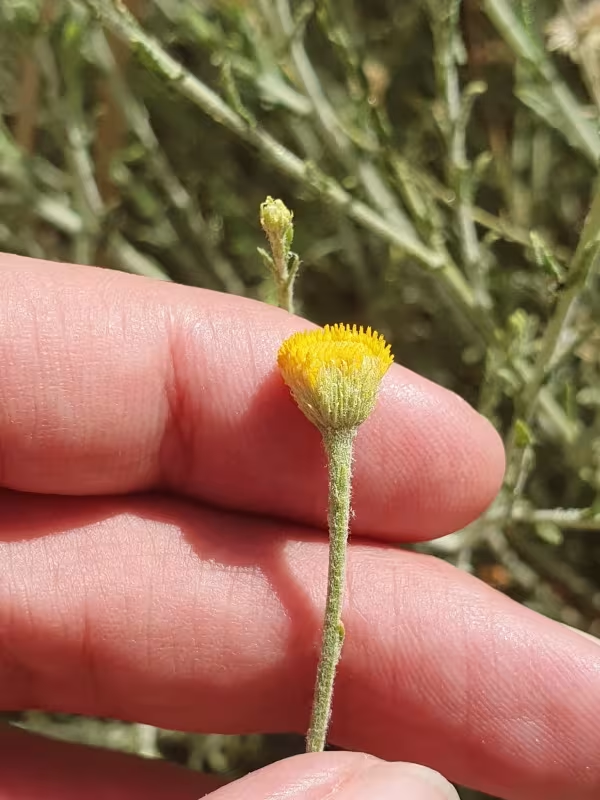
Description
Growing requirements
Pulicaria undulata, commonly known as a member of the Asteraceae family, is a resilient perennial herb. It is indigenous to the arid regions of North Africa, the Middle East, and parts of the Arabian Peninsula, where it thrives in extreme heat.
The plant is highly specialized for desert environments. It prefers well-drained sandy or stony soils, which prevent waterlogging and match the ecological conditions of its native habitats. It is exceptionally tolerant of prolonged drought and intense sunlight.
Botanically, this species manifests as a subshrub with profusely branched stems. Its leaves are distinctively wavy along the margins and are covered with glandular hairs, which serve as an adaptive feature to minimize transpiration in high-temperature environments.
Successful cultivation of Pulicaria undulata requires full sun exposure and minimal irrigation. Overwatering can lead to root system issues, making it unsuitable for heavy, clay-based soils that retain significant amounts of moisture for extended periods.
The economic value of this plant is largely centered on its pharmacological properties. It is harvested for its essential oils and secondary metabolites, which exhibit antibacterial and anti-inflammatory activities, positioning it as a potentially viable specialty crop in arid-land agriculture.