
Arabian fleabane
Pulicaria arabica
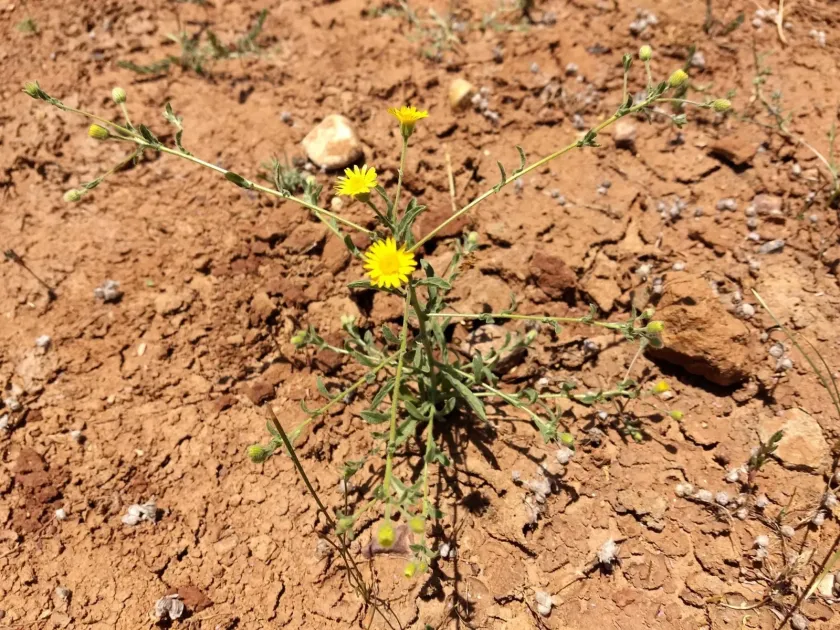
Description
Growing requirements
Arabian fleabane (Pulicaria arabica) is a herbaceous plant belonging to the Asteraceae family. It is well-adapted to arid environments, making it a distinct species among drought-tolerant botanical groups found in desert regions across Northern Africa and the Middle East.
The plant is characterized by its ability to thrive in poor, sandy, and stony soils where water retention is low. Its evolutionary strategy involves efficient water management, which allows the species to maintain physiological functions despite high temperatures and intense solar radiation.
Botanically, it typically grows as a small shrub or annual herb with yellow daisy-like flower heads. The foliage is often pubescent, which serves as a natural defense mechanism to reduce water loss via evaporation, protecting the plant from the harsh climate of its native habitat.
Agricultural success depends on providing high levels of sunlight and well-drained soil. In a field environment, it is essential to avoid stagnant water, as the roots are highly susceptible to decay if exposed to saturated conditions for extended periods during the growing season.
The commercial potential of this crop lies in its secondary metabolites. Research indicates that the plant contains essential oils and compounds with potential antioxidant and insecticidal properties, which are of significant interest for organic pest control and the pharmaceutical industry.
Main diseases and pests
The primary threats to cultivated populations include fungal pathogens stimulated by excessive humidity. Diseases such as root rot or damping-off can devastate a crop if irrigation management is not strictly controlled or if the field drainage is insufficient.
Insect pests, particularly sap-sucking organisms like aphids, pose a risk by damaging young shoots and reducing the overall yield. Integrated pest management strategies, focusing on biological solutions and maintaining adequate plant spacing, are vital for protecting the harvest in agricultural settings.