
Pulicaria sicula
Pulicaria sicula
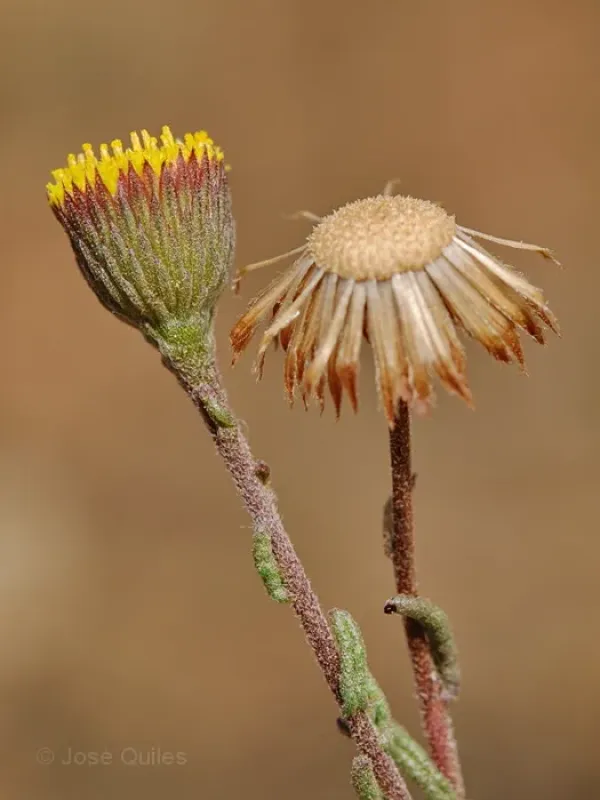
Description
Sowing dates
Pulicaria sicula is a herbaceous perennial member of the Asteraceae family. It is a plant well-adapted to Mediterranean climates, showing resilience in various environments.
Sowing should take place in early spring once the risk of frost has passed and soil temperatures consistently reach at least 12-15 degrees Celsius for optimal germination.
Due to the small size of the seeds, they should be sown shallowly, usually no deeper than 0.5-1 cm, and lightly pressed into the soil to ensure stable moisture contact.
Proper density control is essential during the initial phase. Overcrowding can lead to stunted growth, so seedlings should be thinned if necessary to allow proper root development.
During the first year, the focus is on establishing a robust root system. The plant develops a basal rosette of leaves before transitioning to its flowering stage in subsequent seasons.
Growing requirements
The plant thrives in well-drained, sandy, or loamy soil types. It is highly sensitive to waterlogging, making proper field drainage a prerequisite for successful cultivation.
Pulicaria sicula is a heliophilic species requiring full sun exposure. Reduced light levels will lead to leggy plants and a significant decrease in secondary metabolite production.
It is notably drought-tolerant, utilizing a deep taproot to reach soil moisture during hot, dry spells. This makes it a low-input crop suitable for arid and semi-arid regions.
The optimal pH range for this crop is neutral to slightly alkaline. Acidic soils can hinder nutrient uptake and should be amended with lime if necessary to reach target levels.
Minimal fertilization is required. Excessive nitrogen inputs should be avoided, as they promote excessive vegetative growth at the expense of oil and extract quality.
Yield
This crop is primarily valued for its bioactive compounds, which are utilized in the pharmaceutical and cosmetic industries for their potential antiseptic and repellent properties.
Crop yields are influenced by soil fertility and spacing. A well-managed stand can provide reliable harvests for several years given the perennial nature of the species.
The timing of the harvest is critical; yield components (oils and extracts) peak during full bloom, which is the standard target stage for collection in commercial settings.
The plant demonstrates high seed production capability, which facilitates natural regeneration and provides ample material for scaling up production area sizes.
Efficiency is maintained through sustainable harvest practices, allowing the stand to regenerate and persist, thus reducing the need for constant re-seeding.
Main diseases and pests
Powdery mildew is a common fungal threat, typically appearing in high-humidity conditions with poor air circulation between rows. Proper plant spacing is the main defense.
Root rot occurs if the field suffers from poor drainage or irrigation overmanagement. Ensuring adequate soil aeration is the most effective preventative measure.
Aphids and spider mites may occasionally infest the plants, particularly during dry, hot periods. These pests can reduce the biomass quality if left unchecked.
Weeds pose the greatest challenge in the first year of establishment. Regular weeding and mechanical cultivation between rows are necessary to prevent competition.
- Maintain proper airflow to minimize fungal risks.
- Monitor for pest outbreaks during early vegetative growth.
Harvesting
Harvesting is performed during the peak flowering stage to maximize the concentration of secondary metabolites within the plant tissue.
The stems are cut manually or mechanically, leaving a 10-15 cm stubble to encourage regrowth and preserve the plant's long-term health for the following season.
Immediate drying is required to prevent mold and degradation. The material should be spread in thin layers in a shaded, well-ventilated location away from direct sunlight.
Controlled-temperature drying rooms are preferred in large-scale operations to preserve the delicate aromatic oils that define the crop's market value.
Once dried to the desired moisture content, the crop is packaged in breathable containers to maintain quality during storage and transport to extraction facilities.