
Rehder's wingnut
Pterocarya rehderiana
Description
Growing requirements
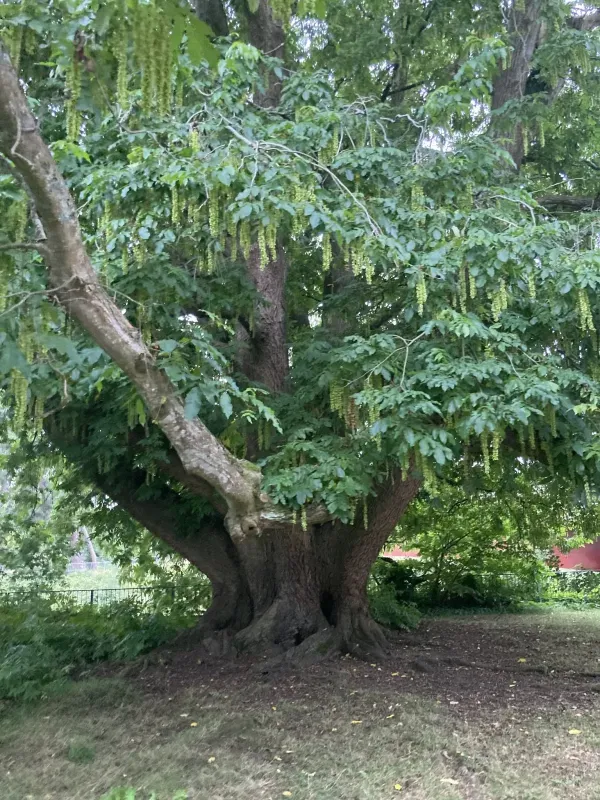
Rehder's wingnut is a deciduous tree belonging to the Juglandaceae family. Native to the mountainous regions of China, this species thrives in humid forest valleys and along riverbanks, showcasing its preference for deep, moisture-retentive soils.
To ensure successful cultivation, the soil must be rich in organic matter and have a neutral to slightly acidic pH. The tree is particularly sensitive to soil compaction and waterlogging, despite needing constant moisture, thus requiring excellent drainage systems.
The climate requirements for Pterocarya rehderiana center on temperate zones. It needs protection from harsh winter winds and prefers locations that provide moderate shelter while allowing enough space for its large, spreading canopy to develop.
Basic maintenance includes consistent irrigation during dry spells to prevent premature leaf drop and stress. A yearly application of balanced organic compost in the early spring significantly boosts foliage density and overall tree health.
This tree is highly valued for its decorative pinnate leaves and its ability to act as a carbon sink in large parklands. It serves as an excellent specimen tree for wide-open spaces where its architectural form can be fully appreciated.
Main diseases and pests
The primary threats to Rehder's wingnut involve fungal pathogens that affect the foliage during periods of stagnant, humid weather. If left untreated, these infections can lead to significant aesthetic damage and reduced tree vigor.
Insect pests such as aphids and leaf miners are common during the active growing season. Integrated pest management strategies are recommended to maintain plant health without disrupting the local ecosystem.
Root rot is a critical concern, usually resulting from improper drainage or overwatering. Maintaining the soil structure to allow oxygen access to the roots is essential for preventing root system decay.
Mechanical damage to the bark can invite pests and wood-decaying fungi. Careful pruning and protection against wildlife grazing are necessary steps for younger trees to reach maturity safely.
Frost damage to terminal buds can occur in late winter or early spring during unpredictable weather shifts. Providing extra mulch around the base helps stabilize soil temperature and protect the shallow root system.