
Pterocarya paliurus
Pterocarya paliurus
Description
Sowing dates
Pterocarya paliurus is typically propagated through seeds or vegetative cuttings. Seeds require a cold stratification process lasting several months to overcome dormancy and ensure uniform germination in the spring.
Sowing should take place once the danger of frost has passed and the soil has warmed sufficiently. Seeds are planted in well-prepared, loose substrates, ensuring they are not buried too deeply to allow for effective sprout emergence.
Vegetative propagation via semi-hardwood cuttings is preferred for commercial plantations to ensure genetic uniformity. Cuttings are rooted in protected environments like mist chambers to maintain optimal humidity levels.
Seedlings require shaded conditions during their first season to protect them from intense direct sunlight. A gradual acclimatization process is necessary before planting them in open fields.
Planting density is adjusted based on the intended yield; higher density is often employed in plantations dedicated to harvesting leaves, while wider spacing is used for timber or individual ornamental trees.
Growing requirements
As a member of the Juglandaceae family, Pterocarya paliurus is native to mountainous subtropical regions of China. The plant thrives in deep, fertile loamy soils that provide excellent drainage while maintaining adequate moisture.
Water availability is crucial; the plant has a high water requirement and performs best in environments with consistent moisture. However, it is sensitive to waterlogging, which can cause severe root damage.
The climate should ideally be mild and humid. While the tree can tolerate light frosts, extreme winter temperatures and drying winds can lead to dieback of young shoots and reduced productivity.
Adequate sunlight is essential for photosynthesis and the synthesis of secondary metabolites that give the leaves their unique sweet taste. Exposure to filtered or morning light is generally ideal for healthy growth.
- Implementation of regular irrigation schedules.
- Application of organic fertilizers during the spring growth phase.
- Frequent soil aeration to prevent compaction.
- Use of mulch to manage ground moisture levels.
- Periodic pruning to shape the tree and encourage new leaf growth.
Yield
The primary economic output of Pterocarya paliurus is its leaves, which are processed into a naturally sweet, health-promoting herbal tea. Yield increases significantly as the tree matures into its prime years.
Managed pruning regimes significantly boost productivity. By stimulating lateral shoot development, growers can maximize the amount of young, tender leaves suitable for harvesting throughout the summer season.
Harvest timing is a critical factor for yield quality. Leaves collected at the peak of their physiological development contain the highest concentration of beneficial flavonoids and natural sweeteners.
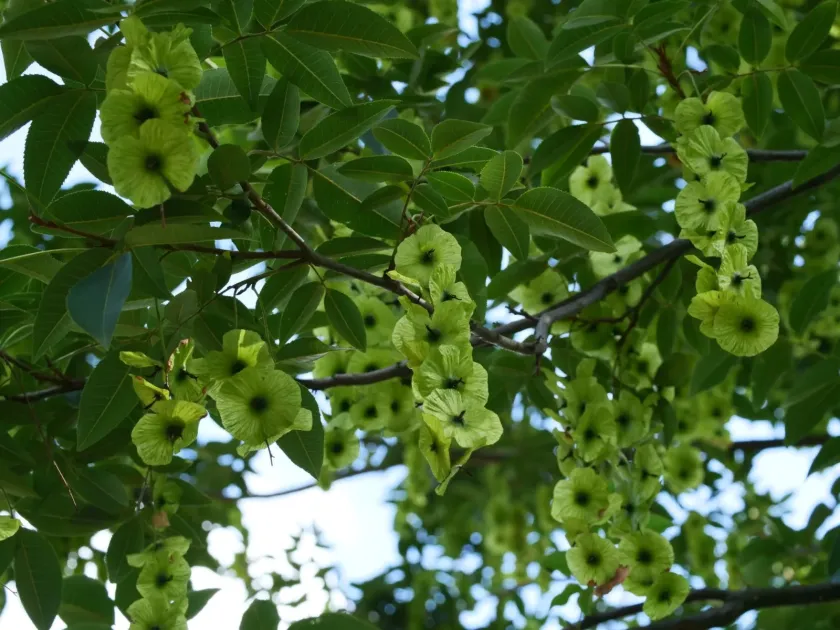
Although the tree also produces winged fruits, their role is currently secondary to the leaf production industry. Research into the potential health benefits of other plant parts remains an area of active interest.
Maintaining a sustainable harvest schedule is important to avoid over-stressing the trees, ensuring long-term viability and consistent yield across the lifespan of the plantation.
Main diseases and pests
Pterocarya paliurus is generally hardy but can be prone to fungal leaf spots, especially in regions with high humidity or poor airflow. These infections can diminish both the quantity and quality of the leaf harvest.
Insect pests such as leaf-eating larvae can cause damage to foliage. Because the leaves are used for tea, integrated pest management (IPM) focusing on biological controls is highly recommended over chemical pesticides.
Root rot remains the most significant threat, particularly on heavy clay soils or in low-lying areas with poor drainage. Proper site selection and land preparation are the most effective preventive measures.
Nutrient deficiencies can make the trees more susceptible to environmental stress and pathogens. Regular soil testing helps maintain the necessary mineral balance to keep the trees vigorous and disease-resistant.
Monitoring for signs of pests or disease should be a routine part of plantation management, allowing for swift action before an infestation spreads across the crop rows.
Harvesting
Harvesting is typically performed manually to ensure that only high-quality leaves are selected. This careful approach maintains the integrity of the foliage, which is essential for premium tea production.
Once harvested, leaves undergo a withering process to reduce moisture and trigger enzymatic changes. This step is vital to developing the distinct, pleasant flavor profile characteristic of the final product.
Modern drying techniques, such as controlled convection heating, are used to stabilize the leaves. Precise temperature control prevents the degradation of delicate active compounds and inhibits mold growth.
After processing, the dried leaves are sorted and stored in moisture-proof, light-resistant packaging. This storage method preserves the aroma and sweetness of the tea for extended periods.
The final product is a popular herbal tea known for its health benefits and unique natural sweetness, serving as a clean-label alternative to artificial sweeteners in many markets.