
Pseudopanax ferox
Pseudopanax ferox T. Kirk
Description
Growing requirements
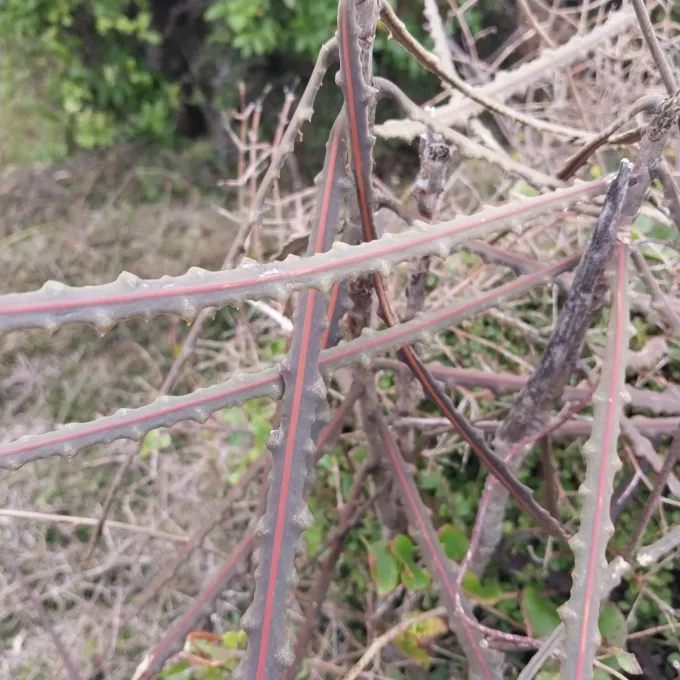
Pseudopanax ferox, commonly known as ferocious lancewood, is a distinct evergreen species belonging to the Araliaceae family. This shrub or small tree is native to New Zealand and is highly regarded in horticulture for its unique juvenile foliage, which looks like metallic, serrated blades.
The plant thrives in temperate climates where temperatures remain consistently mild. It is not frost-hardy and requires protection in regions with harsh winters, often making it a popular choice for conservatory cultivation or as a statement patio plant in temperate zones.
Regarding soil requirements, Pseudopanax ferox needs a fertile, well-draining medium. A mix rich in organic matter, such as compost and perlite or coarse sand, ensures that roots are aerated and prevent the accumulation of excess moisture, which the species dislikes.
Exposure to light should be bright but filtered. While the plant can tolerate some direct sun once established, the delicate leaves of younger specimens are prone to scorching if exposed to intense, direct afternoon heat during the peak of summer.
Care routines include consistent watering during the growing season, ensuring the top layer of soil dries out before re-watering. Regular application of a balanced, liquid slow-release fertilizer during spring and summer supports vigorous growth and health.
Main diseases and pests
Root rot is the most significant threat to Pseudopanax ferox, primarily caused by waterlogged soil and inadequate drainage. Preventing this requires careful irrigation management and using high-quality potting substrates with excellent drainage capacity.
Spider mites are a common pest problem, especially in indoor environments where air humidity is low. These pests thrive in dry conditions and can cause significant foliage discolouration and leaf drop if not addressed promptly with soap sprays or oils.
Scale insects are another common nuisance that can adhere to the woody stems and the undersides of leaves. Regular cleaning of the plant surfaces and manual removal of the insects can help keep infestation levels under control during the early stages.
Fungal leaf spot can occur if there is poor air circulation around the plant, particularly in humid or confined greenhouse spaces. Improving ventilation and reducing overhead watering helps to mitigate these fungal risks significantly.
Nutritional deficiencies often manifest as chlorosis, where the leaves turn pale or yellow. Providing a balanced fertilizer and maintaining the correct soil pH is essential to ensure that the plant absorbs necessary micronutrients effectively.