
Pseudopanax lessonii
Pseudopanax lessonii (DC.) K. Koch
Description
Growing requirements
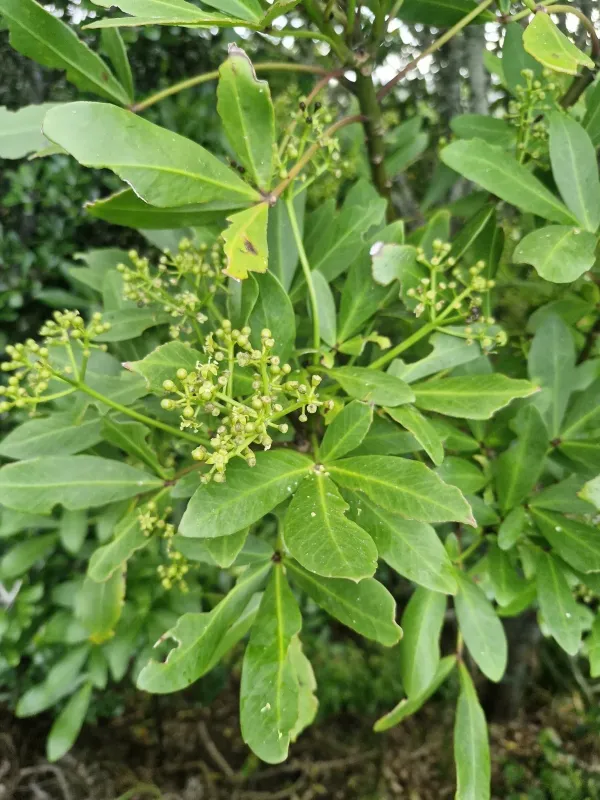
Pseudopanax lessonii is an evergreen shrub or small tree belonging to the Araliaceae family. It is widely recognized for its lush, leathery, and often trifoliate foliage which provides a distinct tropical aesthetic to garden landscapes.
Native to New Zealand, this plant thrives in coastal and lowland forest environments. It is best adapted to regions with mild maritime climates where it can avoid extreme frost, which can damage its juvenile growth.
Optimal growth conditions include well-draining, humus-rich soil that retains some moisture without becoming waterlogged. The plant prefers full sun to partial shade, provided it is shielded from harsh, drying winds.
Cultural practices focus on consistent watering throughout the growing season and the application of balanced fertilizers to support vigorous leaf development. Pruning should be performed in late winter to maintain the desired shape.
In landscaping, it is utilized as an ornamental specimen, a screening plant, or for architectural container gardening. Its versatility and ability to handle various pruning styles make it a favorite for modern urban designs.
Main diseases and pests
Common pests include scale insects and spider mites, which typically target plants grown in sheltered or dry indoor conditions. Using insecticidal soaps or horticultural oils is recommended as an effective management strategy.
Root rot caused by Phytophthora or similar fungal pathogens is the primary disease risk, usually resulting from poor soil drainage. Ensuring that the planting site has excellent drainage is critical for long-term health.