
Pleioblastus viridistriatus
Pleioblastus viridistriatus
Description
Growing requirements
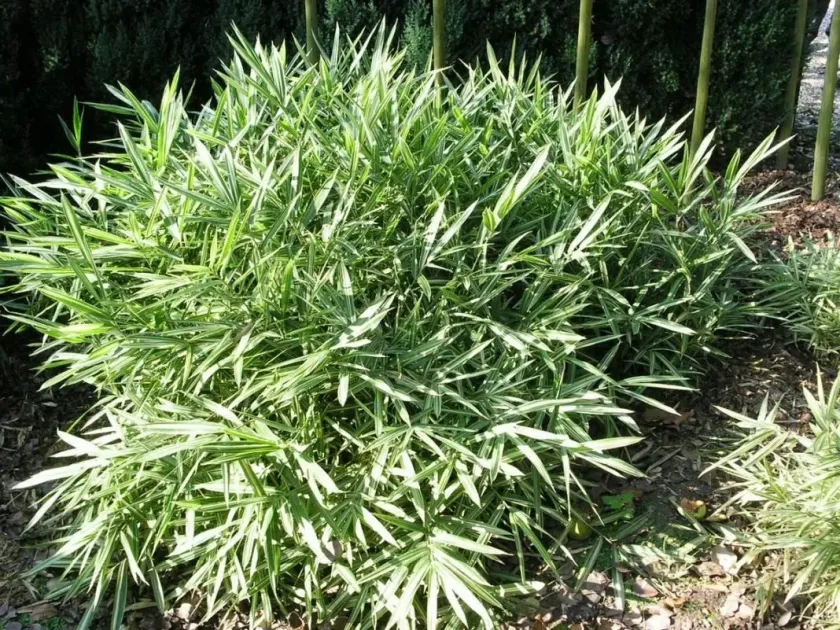
Pleioblastus viridistriatus is a remarkable species of low-growing bamboo belonging to the Poaceae family. It is widely prized by gardeners for its vibrant foliage, which features striking yellow-green variegated stripes.
The plant originates from Japan and is considered one of the most aesthetically pleasing groundcover bamboos. It typically reaches a height of 30 to 60 centimeters, making it perfect for small gardens and borders.
To thrive, this bamboo requires moist, well-draining, and nutrient-rich soil. It performs best in locations with full sun to partial shade, which allows the leaves to maintain their signature bright coloration.
In terms of climate, it is moderately hardy but benefits from protection during harsh winters. It propagates through spreading rhizomes, allowing it to form dense, lush carpets in a relatively short time.
Maintenance involves cutting the plant back to the ground every spring to encourage the growth of fresh, brightly striped leaves. This simple practice ensures the vitality and ornamental appeal of the bamboo throughout the season.
Main diseases and pests
The most common issues for this plant include spider mites, which can appear during prolonged hot and dry weather conditions. Regular inspection and misting can help prevent infestations.
Root rot is a significant risk in poorly drained soils. Gardeners must ensure that the planting site has sufficient slope or gravel drainage to prevent water accumulation near the rhizomes.
Fungal leaf spots can occur when air circulation is poor, particularly in dense plantings. Maintaining proper spacing and removing dead foliage help mitigate this risk.
Winter desiccation is a threat in colder climates, especially when the ground is frozen and the foliage is exposed to cold, drying winds. Mulching serves as an effective protective measure.
Invasive growth is considered a challenge rather than a disease. Without root barriers, this bamboo can spread rapidly into unintended areas, requiring mechanical containment.