
Pleioblastus humilis
Pleioblastus humilis
Description
Growing requirements
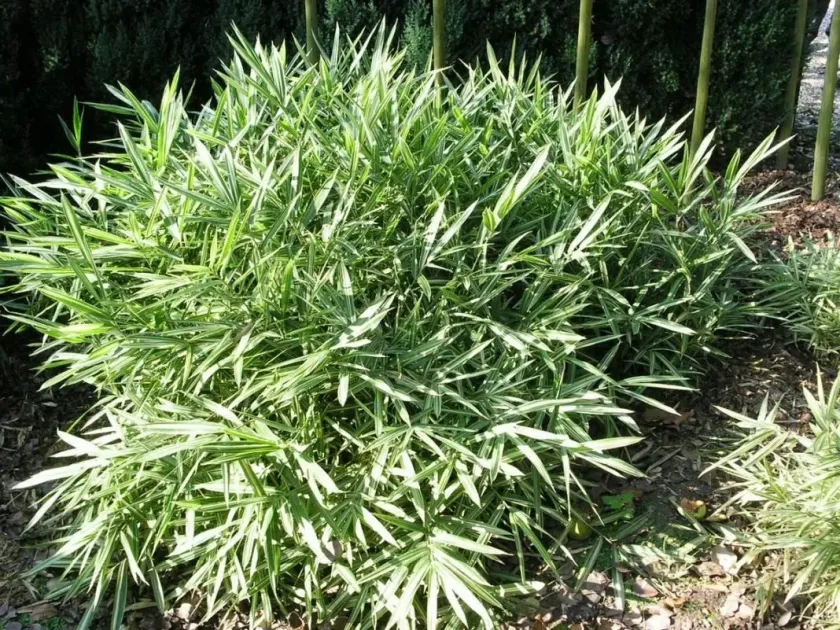
Pleioblastus humilis is a species of dwarf bamboo within the Poaceae family. It is native to East Asia, primarily identified with the temperate regions of Japan where it naturally colonizes forest understories.
The plant thrives in well-drained, fertile soil and requires a location that provides adequate sunlight or partial shade. Exposure to extreme winds should be avoided to maintain the integrity of the foliage.
Botanically, it is characterized by an active rhizome system that allows the plant to spread rapidly, forming dense, low-growing mats of evergreen foliage that rarely exceed 60-80 cm in height.
Cultural requirements include consistent soil moisture, especially during the active growing season, and regular mulching to protect the superficial root system from temperature fluctuations.
In terms of usage, Pleioblastus humilis is highly valued in horticulture for erosion control on slopes and as a structural element in landscape design for creating dense, weed-suppressing ground covers.
Main diseases and pests
Pleioblastus humilis is generally considered a robust plant with few serious health issues, provided that the soil drainage is sufficient to prevent waterlogging.
The most common physiological threat is root rot, which typically occurs in compacted or poorly drained soils where stagnant water persists for extended periods.
Pest infestations, particularly spider mites, may occur during hot, dry summer spells, causing yellowing and stippling of the leaves if humidity is not managed correctly.
Maintenance routines should include periodic thinning of the stand to ensure adequate airflow, which is critical in preventing the buildup of fungal pathogens within the dense foliage.
If management of pests becomes necessary, growers should utilize integrated pest management strategies, focusing on site sanitation and targeted applications of appropriate acaricides.