
Pleioblastus variegatus
Pleioblastus variegatus
Description
Growing requirements
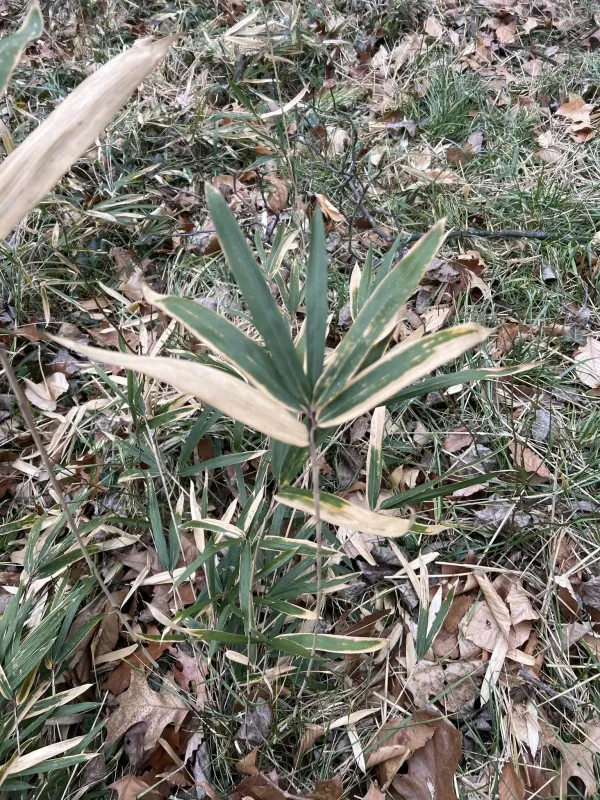
Pleioblastus variegatus is a striking dwarf bamboo species within the Poaceae family, widely prized for its variegated white and green foliage. This plant typically reaches a height of 30 to 60 centimeters, forming dense, weed-suppressing mats in garden landscapes.
Native to Japan, this bamboo thrives in climates ranging from temperate to subtropical. While it exhibits some cold hardiness, it prefers sheltered spots where it is protected from harsh, drying winds that can cause brown leaf tips during colder months.
The ideal growing environment for this species is a moist, well-draining soil rich in organic matter. While it is adaptable to different light conditions, partial shade is often best, as it prevents the intense midday sun from scorching the delicate white variegation.
In terms of cultivation, establishing physical root barriers is critical due to the plant's vigorous, running rhizomatous system. Without these barriers, the plant will easily colonize adjacent areas, making it difficult to manage in small garden spaces.
Regular maintenance includes cutting back the plants to the ground in early spring to encourage fresh, vigorous growth. This practice ensures that the new foliage displays the most vibrant variegation throughout the subsequent growing season.
Main diseases and pests
Spider mites are the most common pest, especially during hot and dry summer conditions. Keeping the plants well-hydrated and increasing humidity through light misting can effectively discourage these mites from establishing large populations.
Fungal diseases like rust and leaf spot may occasionally affect the foliage, particularly if the plants are overcrowded with poor airflow. Maintaining proper spacing and removing debris from around the root zone helps mitigate these risks significantly.
Root rot is a major threat if the plant is grown in waterlogged or heavy, poorly draining soils. Ensuring that the site has excellent drainage is the most effective preventative measure against soil-borne pathogens and root death.
Scale insects can sometimes be observed on the bamboo stems; if found, they can be manually removed or treated with horticultural oils. Early detection through regular monitoring is key to keeping the bamboo healthy and thriving.
Overall, Pleioblastus variegatus is a robust and relatively low-maintenance ornamental plant. When situated in optimal soil and provided with adequate moisture, it remains highly resistant to pests and diseases, demanding little more than occasional thinning.