
Platanthera unalascensis
Platanthera unalascensis
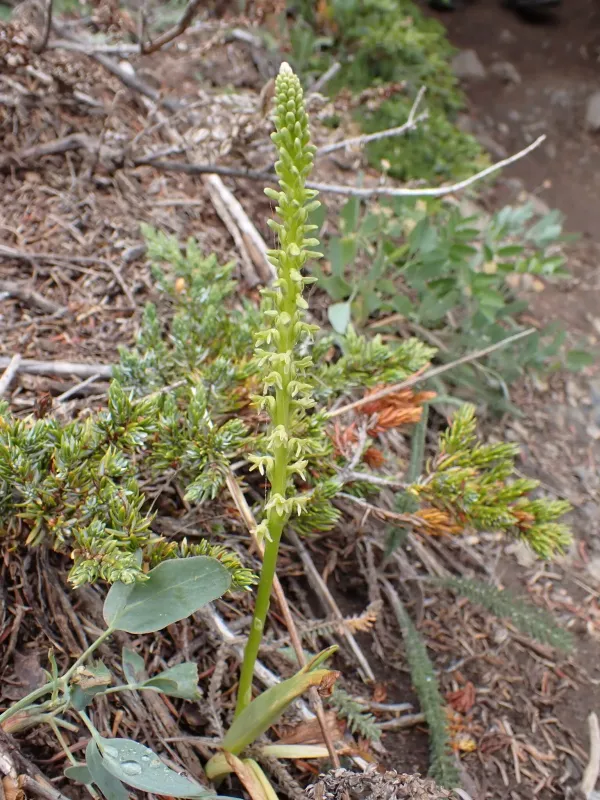
Description
Growing requirements
Platanthera unalascensis belongs to the Orchidaceae family. It is a perennial herbaceous plant that is not cultivated as an agricultural crop in the traditional sense due to its complex symbiotic requirements and slow growth rate in natural environments.
The native distribution of this species spans the Pacific Northwest of North America, stretching from Alaska down to the coastal regions. It thrives in coniferous forests, mountain slopes, and meadows where the soil composition provides both drainage and consistent organic moisture.
Botanically, the species is identified by its single or multiple basal leaves and a slender stalk producing a spike of small, inconspicuous yellowish-green or white flowers. The plant relies on a specialized root system that forms mandatory associations with mycorrhizal fungi to obtain nutrients.
Climate requirements involve cool to moderate temperatures and a high level of humidity. In terms of soil management, the plant demands acidic, well-drained media that mimics natural forest floors. Successful cultivation remains a challenge for horticulturists, as the plant cannot survive without its specific fungal partners.
The хозяйственное usage of this species is primarily focused on biodiversity conservation and botanical research. It holds no value as an industrial or edible crop, making its protection in its natural habitat the main priority for environmental management strategies.
Main diseases and pests
Key threats to Platanthera unalascensis involve habitat loss caused by deforestation and changes in soil chemistry. Pathogens, primarily soil-borne fungi, can cause root rot if the moisture levels are not carefully managed, often leading to rapid plant decline.
Typical pests affecting this plant include slugs and snails that graze on the foliage and developing flower buds. Due to the species' low reproduction rate and specific environmental niche, these pests can cause significant damage to small local populations if left uncontrolled.