
White fringed orchid
Platanthera blephariglottis
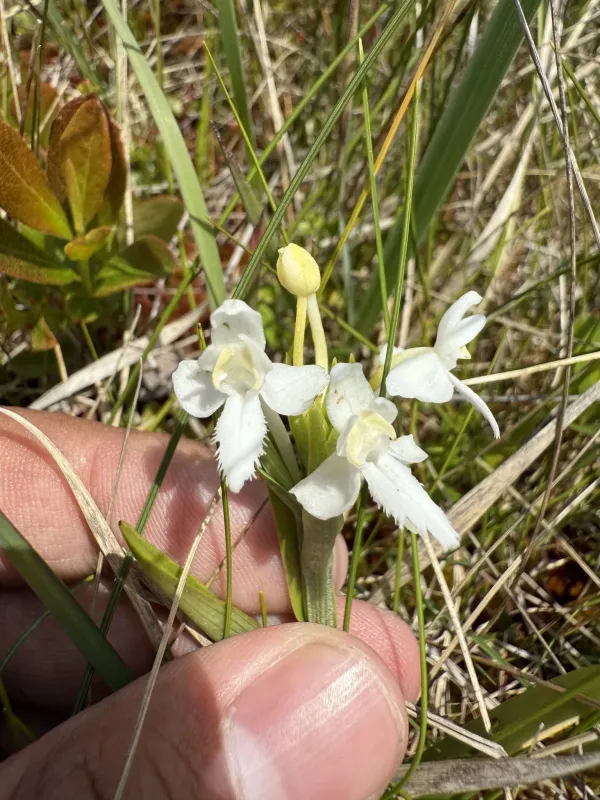
Description
Growing requirements
The white fringed orchid (Platanthera blephariglottis) is a perennial herbaceous plant belonging to the Orchidaceae family. Native to North America, it is predominantly found in habitats ranging from acidic bogs to moist meadows and sandy wetland margins.
This species is well-known for its tall, erect stem bearing a dense raceme of striking white flowers. The defining feature is the labellum, which displays a fringed, lace-like appearance, making it highly valued by orchid enthusiasts and conservationists.
Botanically, it relies on specific mycorrhizal fungi in the soil to assist with nutrient uptake. The plant produces a fleshy root system that thrives only in environments where water remains consistently available throughout the growing season.
To successfully cultivate this plant, one must provide a specialized medium, typically composed of peat moss or similar acidic materials. High humidity and bright, indirect sunlight are essential to ensure the plant reaches its full potential.
Cultivation of Platanthera blephariglottis is considered advanced, as it requires a stable, undisturbed environment. It is generally not suited for standard garden beds but rather for specialized bogs or controlled wetland setups where water quality and acidity are strictly managed.
Main diseases and pests
Root rot is the most common threat to this plant, often triggered by stagnant water conditions without adequate oxygenation. Maintaining high-quality water flow is crucial for long-term survival in an artificial environment.
Pests such as slugs and snails are highly destructive to the foliage and developing flower spikes. Regular monitoring and physical barriers are required to protect the plants during the spring growth phase.
Spider mites can be a serious nuisance in greenhouse conditions where the air might become too dry. If an infestation occurs, it can lead to rapid yellowing and premature dropping of leaves.
Competition from aggressive wetland flora is a significant issue. As a slow-growing species, Platanthera blephariglottis is easily outcompeted by grasses or woody species that encroach upon its territory.
Environmental factors, particularly changes in water tables and soil pollution, pose the greatest risks to native populations. Effective management requires protecting these sensitive sites from human disruption and chemical runoff.