
Greater butterfly-orchid
Platanthera chlorantha
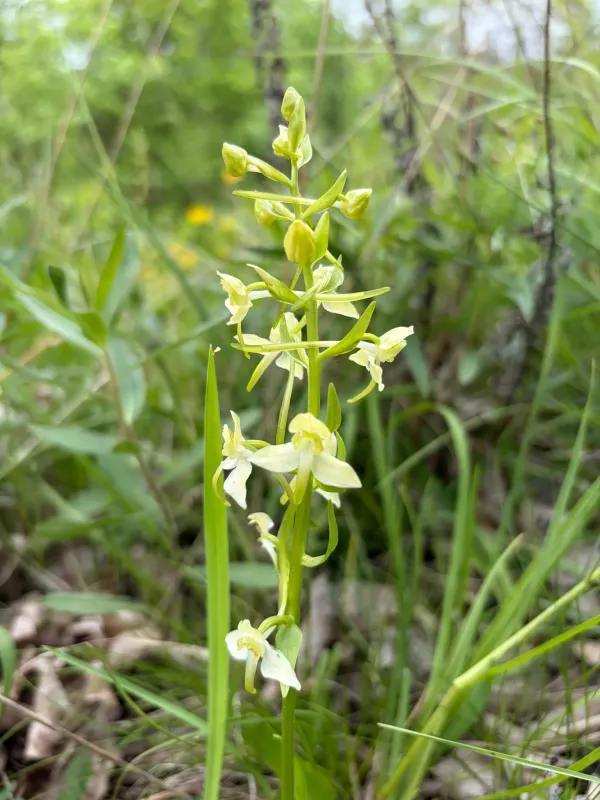
Description
Growing requirements
The greater butterfly-orchid is a perennial herbaceous plant belonging to the Orchidaceae family. It is typically found in woodland habitats, meadows, and scrublands across Europe and parts of Asia, where it thrives in semi-shaded conditions.
The plant requires well-drained, nutrient-rich soils with specific pH levels to support its growth. In agricultural practice, this species is not cultivated as a crop, as it relies on specific mycorrhizal fungi associations for germination and development.
Morphologically, the species is distinguished by its twin root tubers and a prominent inflorescence featuring white-to-greenish flowers with a strong, night-time fragrance. This scent is crucial for attracting nocturnal hawkmoths, which serve as its primary pollinators.
Climatic adaptability is geared towards temperate zones. The plant possesses a robust ability to survive cold winters, provided there is sufficient soil cover, but it is highly sensitive to habitat disturbance and sudden changes in water table levels.
Economic use of the plant is restricted to non-commercial scientific and conservation purposes. It is often listed in national red data books as a protected species, highlighting the need for maintaining existing wild ecosystems rather than large-scale harvesting.
Main diseases and pests
The primary threat to the greater butterfly-orchid is the loss of suitable habitats due to deforestation, land development, and changes in agricultural land use. When its specialized forest environment is cleared, the orchid populations quickly decline.
Soil pathogens and fungal diseases represent a significant threat to the plant's health, particularly when the soil drainage is compromised by flooding. Excessive moisture can lead to root rot, destroying the tubers that sustain the plant.
Herbivory by slugs, snails, and various insects can cause substantial damage to the leaves and developing flower stalks. This grazing pressure often prevents the plant from completing its reproductive cycle and producing viable seeds.
Human activities such as recreational trampling, unauthorized collection of flowers, and improper forestry management severely threaten the long-term survival of the species. Soil compaction effectively prevents the development of new root structures.
Climate change poses an indirect threat, as shifts in seasonal rainfall patterns can affect the activity periods of hawkmoths. Without consistent and timely pollination, the plant fails to produce seeds, leading to a breakdown in population regeneration.