
Lesser butterfly-orchid
Platanthera bifolia
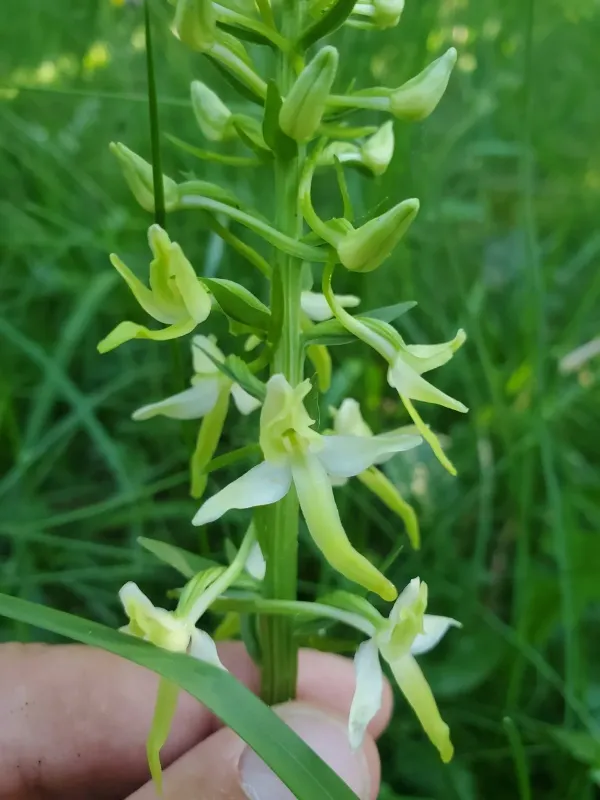
Description
Growing requirements
The Lesser butterfly-orchid (Platanthera bifolia) is a perennial herbaceous plant belonging to the Orchidaceae family. It is widely recognized for its pair of large basal leaves and a spike of fragrant, white-creamy flowers.
Its natural range extends across temperate Europe and Asia. The species typically inhabits open woodlands, heathlands, and grassy meadows, preferring areas with high light availability and moderate moisture levels.
The plant has strict soil requirements, favoring neutral to slightly acidic soils rich in organic matter. Its development is inherently tied to the presence of specific soil fungi (mycorrhiza), which are essential for the germination of its dust-like seeds.
Climate adaptability is limited to temperate zones. The plant is frost-hardy and undergoes a dormant phase during winter, sustained by its underground tubers that store nutrients for the upcoming spring growth.
Botanical characteristics include a tall, slender stem and a nocturnal fragrance mechanism designed to attract hawkmoths, which are the primary pollinators for this species in the wild.
Main diseases and pests
The primary threats to this species include habitat loss due to deforestation, urbanization, and changes in agricultural land management, such as the drainage of damp meadows.
Fungal diseases are a significant risk, particularly those affecting the root system when soil drainage is poor. Rotting of the tubers can occur in waterlogged conditions, leading to the collapse of the plant.
Pests such as aphids and leaf-eating beetles can cause stress to the plant, especially during the early growth stage. Snails and slugs are also common threats to the young foliage.
The collection of plants for ornamental or medicinal purposes remains a concern for conservationists, as the orchid's slow reproductive cycle makes it difficult for populations to recover.
Environmental changes, including atmospheric pollution and climate shift, are continuously impacting the delicate balance between the orchid and its symbiotic fungal partners.