
Yellow Fringed Orchid
Platanthera ciliaris
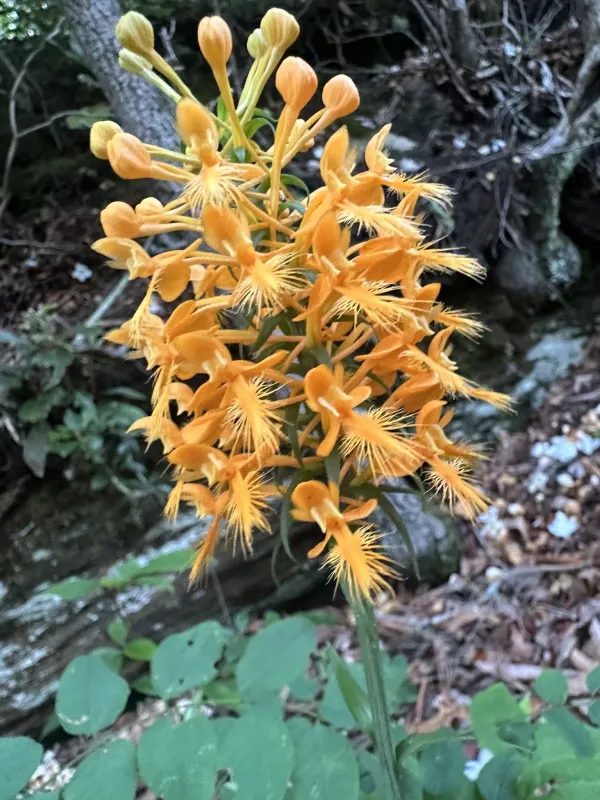
Description
Growing requirements
The Yellow Fringed Orchid (Platanthera ciliaris) is a perennial herb belonging to the Orchidaceae family. It is native to North America and is distinguished by its vibrant, showy orange-yellow blossoms.
In terms of habitat, this species requires specific environmental conditions. It thrives in open, sunny wetlands, including bogs, moist meadows, and the edges of marshy forests where sunlight is abundant.
Soil requirements are quite strict as the plant needs acidic, nutrient-rich, and moisture-retentive substrates. Proper drainage is essential to prevent root rot while maintaining the high humidity the roots require.
Climate suitability for this plant involves regions with temperate characteristics where summers are warm and moist. It is generally not drought-tolerant and requires consistent hydration throughout its growing season.
The plant possesses a unique morphology with a distinct fringed lip on each flower. Its cultivation relies heavily on mycorrhizal associations, which facilitate nutrient uptake in its natural soil environment.
Main diseases and pests
The most common pests affecting this orchid include aphids and various caterpillars that target the delicate inflorescences and foliage during the active growth phase.
Fungal pathogens such as grey mould are significant risks, particularly in stagnant, high-humidity environments that lack proper ventilation between individual plants.
Root rot caused by pathogenic soil fungi is the leading cause of plant loss when the substrate is too compacted or becomes waterlogged for extended periods.
Competition from invasive plant species is a major threat in natural habitats and garden settings, as the orchid is relatively slow-growing and can be easily crowded out.
Slugs and snails frequently feed on the tender shoots and floral spikes, which can severely compromise the plant's health and reduce its overall reproductive capacity.