
Slender bog orchid
Platanthera stricta
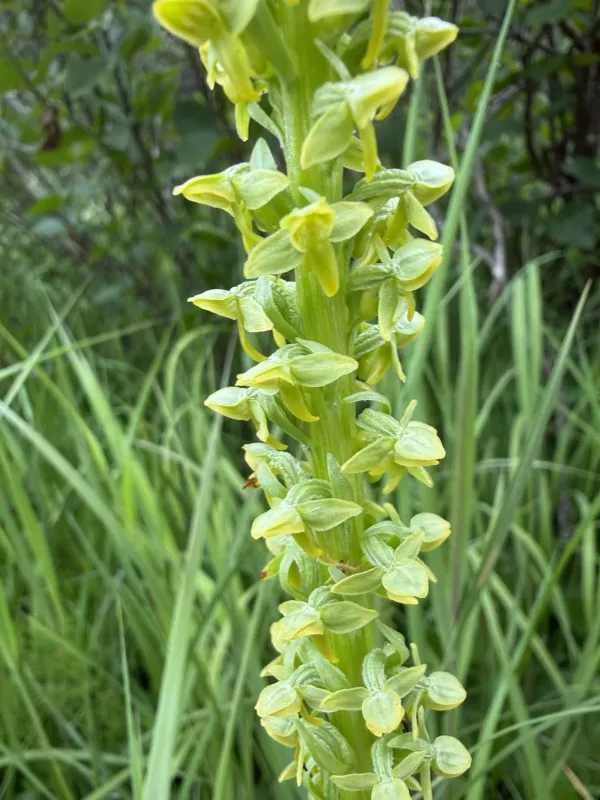
Description
Growing requirements
The slender bog orchid (Platanthera stricta) is a perennial herbaceous plant belonging to the Orchidaceae family. While not an agricultural commodity in the traditional sense, it serves as a crucial biological indicator within its natural ecosystem.
The species is native to western North America, ranging from Alaska down through the coastal and mountain regions of California. It thrives primarily in wet environments, including fens, marshes, and the margins of mountain streams where groundwater remains near the surface.
Botanically, it features a singular, erect stem rising from a cluster of tuberous roots. The flowers are arranged in a spike, ranging from greenish-white to pale yellow, and are adapted for pollination by specific insects within their habitat.
Successful cultivation of this orchid is notoriously difficult because it relies on a symbiotic relationship with mycorrhizal fungi in the soil. Without these fungi, the seeds cannot germinate, and the plant cannot absorb the necessary nutrients from the substrate.
Currently, its usage is strictly limited to conservation programs and botanical research. It requires high humidity, consistent moisture, and filtered sunlight, making it unsuitable for commercial nursery production or field-scale farming.
Main diseases and pests
The primary threat to the slender bog orchid is the drainage of wetlands for land development or agricultural use. As the water table drops, the specific micro-habitats required for the orchid's survival vanish, leading to localized extinction.
Root rot and fungal infections pose a significant risk, particularly when soil drainage is poor or when artificial fertilizers are introduced. These chemicals can disrupt the delicate mycorrhizal network, effectively starving the plant.
Invasive plant species can quickly outcompete the orchid, as it grows relatively slowly and is easily shaded out by more aggressive weeds. Maintaining a proper successional stage in its natural habitat is essential for its persistence.
Insects such as aphids and leaf-eating caterpillars can damage the floral spikes, which reduces the plant's ability to produce viable seeds. Because the population density is often low, such damage can have a disproportionately negative impact on genetic diversity.
Successful management of this plant requires protecting its hydrological basin from pollution and encroachment. Conservation efforts focus on preserving large, intact wetland ecosystems where the natural symbiosis between the orchid and the soil microbiota can be maintained without human interference.