
Green-flowered bog orchid
Platanthera sparsiflora
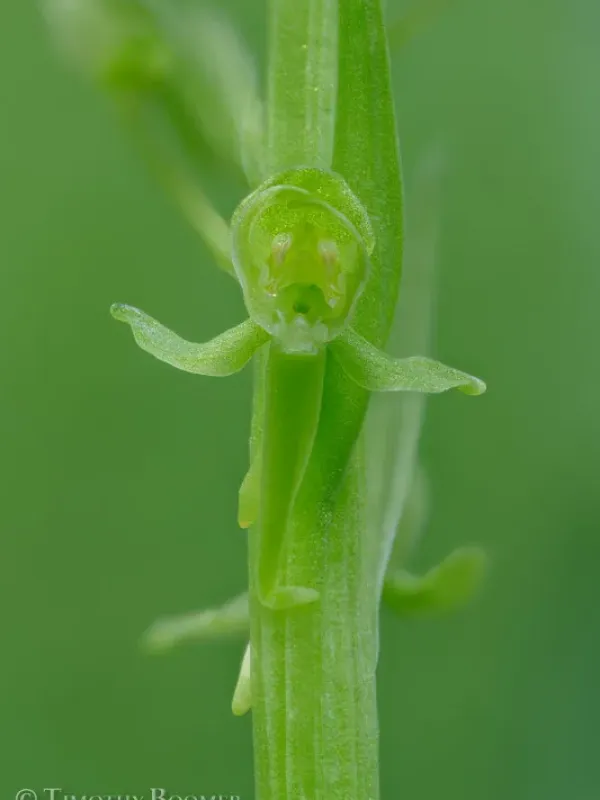
Description
Growing requirements
Platanthera sparsiflora, commonly known as the Green-flowered bog orchid, is a perennial herbaceous plant belonging to the Orchidaceae family. It is native to the western regions of North America, typically inhabiting high-moisture ecosystems.
The species is primarily found in wetland areas, including stream banks, marshes, and damp mountain meadows. It relies on a consistent supply of groundwater and a high-humidity environment, making it unsuitable for standard agricultural field cultivation.
Botanically, the plant is characterized by a slender stem with sparse, greenish-white flowers arranged along the raceme. Its root system is composed of tuberous structures, which allow the plant to store essential nutrients throughout the dormant season.
A crucial requirement for the survival of this species is its obligate symbiosis with specific mycorrhizal fungi in the soil. Without this fungal association, seeds cannot germinate or obtain the necessary nutrients, making the species highly sensitive to soil disturbance.
While not a commercial crop, Platanthera sparsiflora holds ecological significance as a bioindicator of healthy, undisturbed wetland habitats. Cultivation efforts are limited strictly to botanical research and conservation programs aimed at restoring local populations.
Main diseases and pests
The primary threat to the stability of Platanthera sparsiflora populations is the degradation of wetland habitats through drainage projects, which causes the rapid loss of the specific soil moisture levels the plant requires.
Chemical runoff from nearby agricultural activities poses a severe risk, as herbicides and fertilizers can disrupt the delicate mycorrhizal balance in the soil, effectively killing the plant's symbiotic partners.
Overgrazing by livestock in and around sensitive ecosystems leads to physical damage to the plants and compaction of the soil, which prevents oxygen from reaching the underground tubers, leading to root rot.
The invasion of non-native plant species creates intense competition for resources, effectively shading out the smaller orchids and preventing them from completing their reproductive cycle during the growing season.
Due to the plant's extreme specificity regarding pollinators and fungi, even minor fluctuations in local insect populations or soil microflora can lead to a long-term decline in the viability of the entire orchid population.