
Blunt-leaved bog orchid
Platanthera obtusata
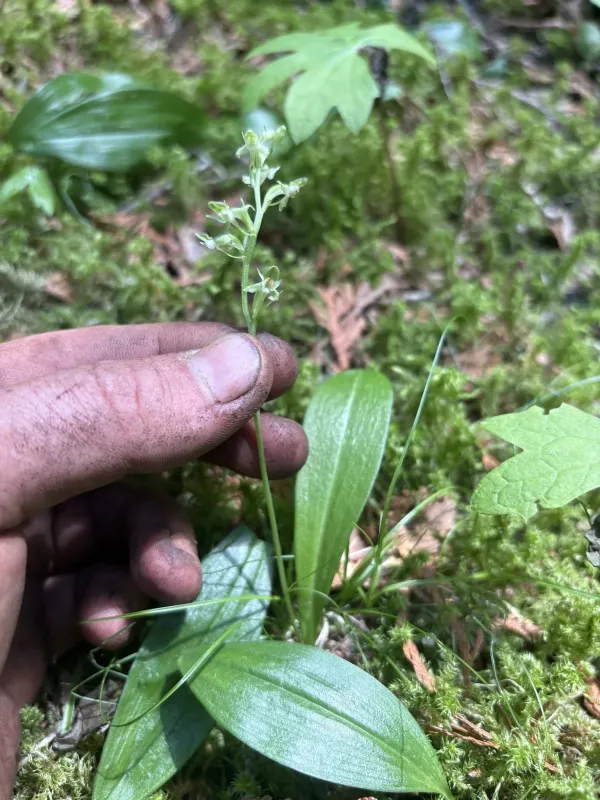
Description
Growing requirements
The blunt-leaved bog orchid (Platanthera obtusata) is a perennial herbaceous plant belonging to the Orchidaceae family. It is a circumboreal species, meaning it is widely distributed across the northern parts of North America and Eurasia, often thriving in cold, damp environments.
The plant is typically found in boggy meadows, coniferous forests, and moist peatlands. Its natural habitat is characterized by acidic soils and consistent moisture levels, where it coexists with mosses and other specialized moisture-loving flora that define these unique ecosystems.
Botanically, the species is distinguished by a single, blunt-tipped basal leaf and a slender stalk bearing a spike of small, greenish flowers. These blooms are known for their ability to attract specific nocturnal insects, demonstrating a highly specialized evolutionary adaptation to their environment.
Regarding cultivation requirements, the blunt-leaved bog orchid is not a typical agricultural crop. It demands high humidity, cool temperatures, and a specific mycorrhizal fungi relationship in the soil for nutrient exchange. Attempting to grow it outside of these strict conditions usually results in immediate failure.
In terms of usage, the plant is primarily of interest to botanists and conservationists. It serves as an indicator species for the health of wetland ecosystems. Due to its fragility and slow growth rate, the plant is considered a protected species in many regions, and its extraction from the wild is strictly regulated or prohibited.