
Northern green orchid
Platanthera hyperborea
Description
Growing requirements
The Northern green orchid (Platanthera hyperborea) is a perennial herbaceous plant belonging to the Orchidaceae family. It is widely distributed across northern North America, including Greenland and subarctic regions, where it thrives in cold and harsh climates.
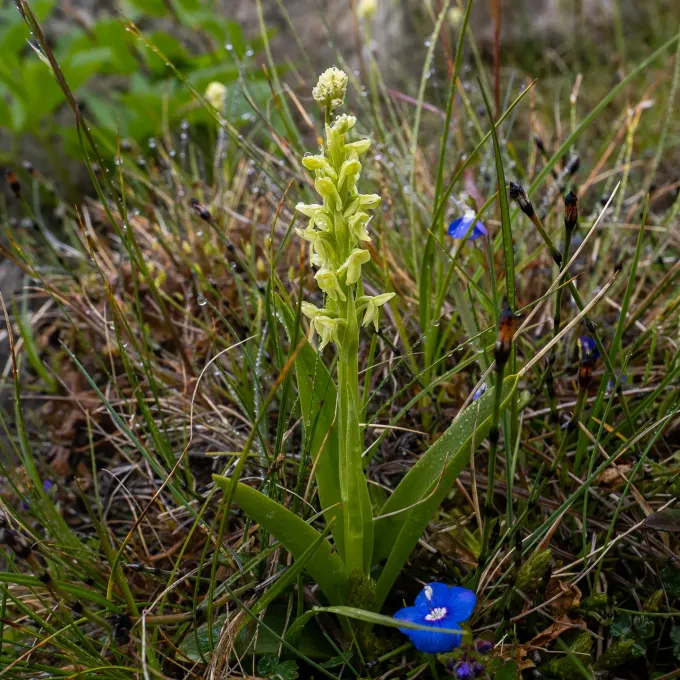
Botanically, this species is characterized by its tall, leafy stem and a dense spike of greenish-yellow flowers. It has evolved to survive in extreme conditions, often found in fens, wet meadows, and alongside streams where moisture is consistently available throughout the short growing season.
Soil requirements for this orchid are quite specific, favoring organic, neutral to slightly acidic soils. The presence of symbiotic mycorrhizal fungi is an absolute necessity, as the seeds and roots depend on these fungal partners for nutrient uptake and survival in their native, often nutrient-poor environments.
Regarding climate, the plant requires cool temperatures and is highly adapted to frost and permafrost conditions. In a controlled environment or gardening context, protecting the plant from intense direct heat and ensuring adequate humidity levels are the primary challenges for successful management.
While not a traditional cash crop, the species is highly valued in botanical research for understanding cold-hardiness and plant adaptation. Its cultivation is mostly restricted to specialized botanical collections or ecological conservation projects aimed at preserving northern biodiversity.
Main diseases and pests
The main threats to the species include habitat destruction caused by wetlands drainage and development. Furthermore, changes in local micro-climates can disrupt the essential mycorrhizal fungi populations, leading to the decline of local orchid colonies.
Typical threats include fungal pathogens such as root rot, which are often exacerbated by poor air circulation or water stagnation. Pests like slugs and snails represent a constant danger to the young shoots, while aphids may damage the flower spikes, significantly reducing seed production.