
Hooker's Orchid
Platanthera hookeri
Description
Growing requirements
Hooker's Orchid (Platanthera hookeri) is a perennial herbaceous plant belonging to the Orchidaceae family. It is strictly a wild species and is not classified as an agricultural crop, having no role in commercial food production or industrial agriculture.
The plant originates from North America, with its range extending across various regions of Canada and the United States. It typically inhabits moist, shaded forest areas. The natural substrate is usually leaf litter or organic-rich soil that supports complex mycorrhizal networks essential for the plant's life cycle.
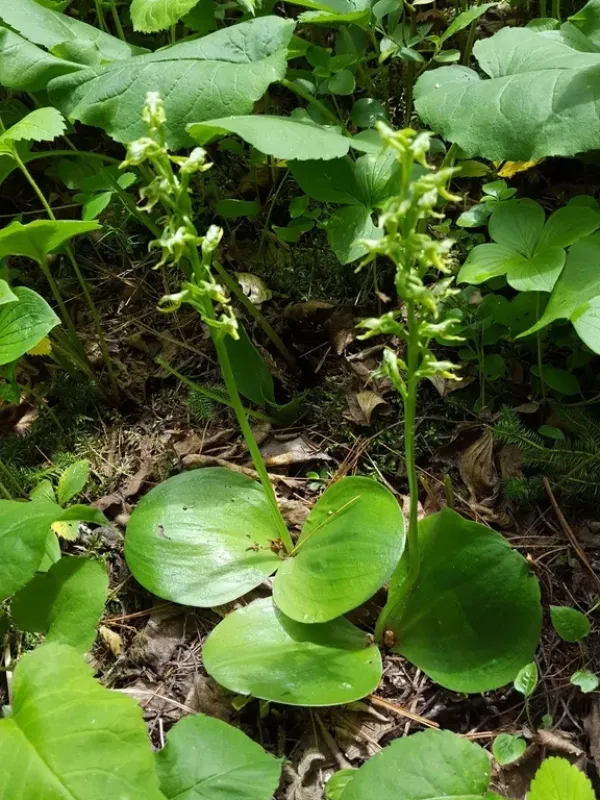
The botanical structure is defined by its two large, basal leaves resting directly on the ground. The inflorescence consists of a tall spike featuring several yellowish-green, nectar-producing flowers. Unlike agricultural crops, it relies on specific forest soil biota to germinate and mature.
Regarding environmental requirements, the species demands a stable temperate forest microclimate. It thrives in conditions of consistent moisture and filtered sunlight. Any disturbance to the soil structure or the surrounding forest canopy usually leads to the decline of the local population.
The economic value of this plant is non-existent in the agricultural sense. However, it holds significant ecological value as an indicator species for forest health. It cannot be cultivated under standard farming practices due to its obligate symbiotic relationship with mycorrhizal fungi.
Main diseases and pests
The primary threats include habitat destruction, deforestation, and the alteration of local forest hydrology. The plant is particularly susceptible to soil compaction and invasive species that outcompete it for nutrients. There are no common agricultural pests that target it, but it is highly vulnerable to habitat fragmentation.