
Platanthera hologlottis
Platanthera hologlottis
Description
Growing requirements
Platanthera hologlottis is a perennial orchid species belonging to the Orchidaceae family. It is not an agricultural crop but a wild plant species of significant botanical interest, often found in specialized habitats across East Asia.
The plant thrives in regions characterized by high humidity, including marshes, wet meadows, and riparian zones. Its distribution includes parts of the Russian Far East, Japan, the Korean Peninsula, and Northern China.
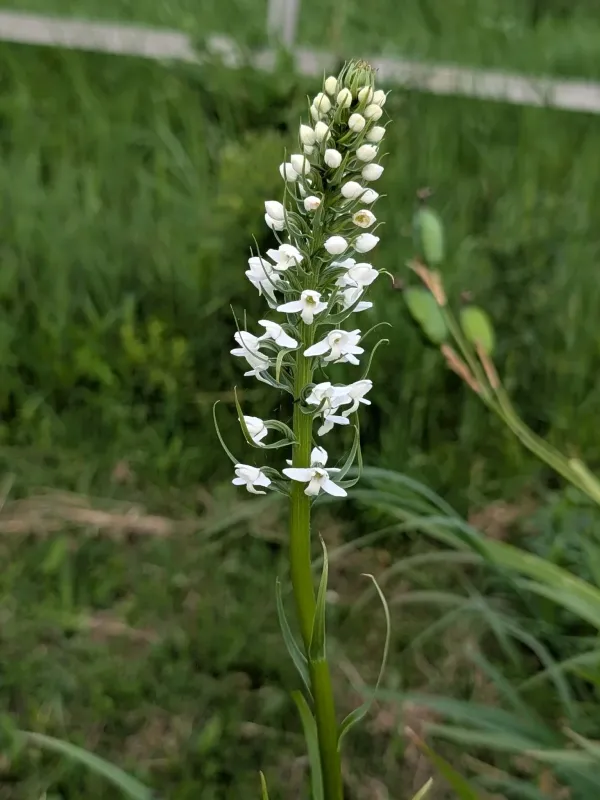
Morphologically, the plant develops from a pair of solid root tubers. It features an erect stem that can reach significant heights, with a cluster of basal leaves that are typically lanceolate in shape.
The inflorescence consists of a dense spike of white to greenish-white flowers. The defining feature of this species, as indicated by its specific epithet, is its entire (not lobed) labellum, which distinguishes it from other species in the genus.
Development is heavily dependent on a symbiotic relationship with specific soil fungi. This mycorrhizal association is essential for nutrient uptake and germination, making the orchid highly susceptible to soil degradation.
Main diseases and pests
The primary threat to the survival of Platanthera hologlottis is habitat destruction. Land drainage, agricultural expansion, and wetland reclamation are the most significant factors reducing the available natural range of the orchid.
Changes in the hydrological regime pose a lethal risk to the plant. Because it requires specific moisture levels in the substrate, any artificial lowering of the groundwater table causes the population to collapse rapidly.
Competition from more aggressive, invasive plant species, encouraged by human-induced land changes, often results in the exclusion of Platanthera hologlottis from its native niches due to shading and nutrient uptake.
Pathogenic threats are usually secondary to environmental factors, although fungal rot can occur if soil water stagnation becomes excessive or if the micro-ecosystem is compromised by pollution or chemical runoff.
Conservation efforts are critical for the species. Many regional authorities classify it as rare or endangered, mandating strict protection of its habitat to prevent extinction caused by commercial land use or over-exploitation of resources.