
Pale green orchid
Platanthera flava
Description
Growing requirements
Platanthera flava, commonly known as the pale green orchid, is a member of the Orchidaceae family. It is a perennial plant that thrives in specific wetland habitats and does not have agricultural commercial applications.
Native to North America, its distribution is centered in wet meadows, floodplains, and forested wetlands. It requires a constant supply of moisture and is highly intolerant to drought conditions.
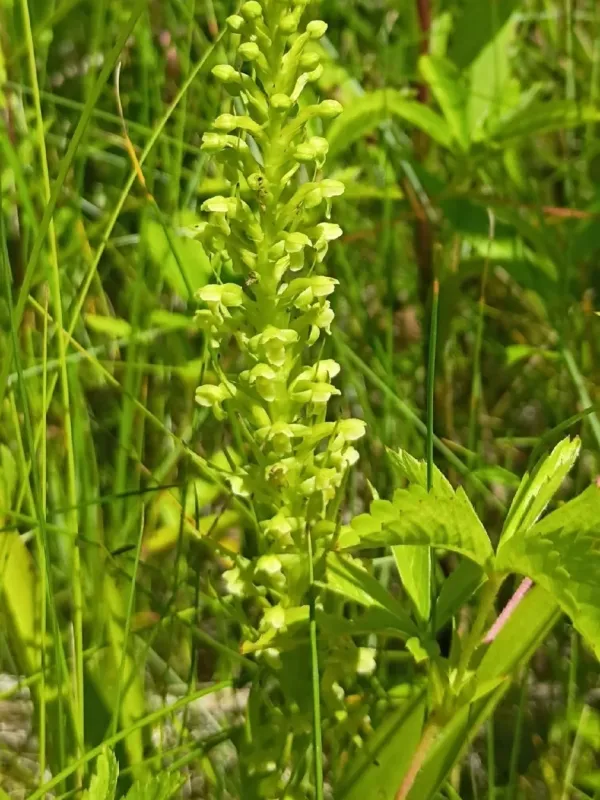
The botanical structure consists of a basal leaf arrangement and a tall inflorescence with small, yellowish-green flowers. The plant relies heavily on its root system, which develops in partnership with symbiotic mycorrhizal fungi.
Soil requirements are very specific: it prefers organic, acidic to neutral soils with excellent drainage despite the need for high moisture levels. Poor aeration of the substrate typically leads to root decay.
Temperature management is critical for the species, as it is adapted to temperate climates with cool to moderate growing seasons. Sudden heat waves can cause severe physiological stress to the plant.
Main diseases and pests
The primary threat to Platanthera flava populations is the loss and fragmentation of wetland habitats. Land development and drainage projects significantly reduce the available areas for this orchid.
Invasive species represent a major competitive threat. Non-native plants often outcompete the pale green orchid for sunlight and essential soil nutrients, leading to population declines.
Pathogenic fungi are a significant threat in environments where water becomes stagnant. Root rots and leaf spots can rapidly spread if the equilibrium between moisture and aeration is disrupted.
Insect pests, including slugs and certain caterpillars, can cause significant damage to the floral spikes. Given the plant's rarity, even minor herbivory can have long-term consequences for seed production.
Pollution from agricultural runoff, particularly nitrates and phosphates, alters the chemistry of the wetland soil. This causes an imbalance that favors more aggressive plants at the expense of native orchids.