
Green wood orchid
Platanthera clavellata
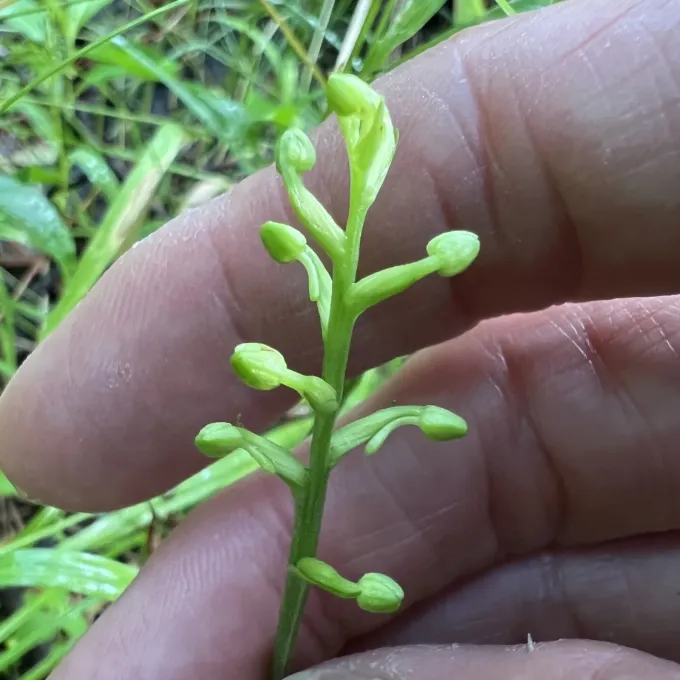
Description
Growing requirements
The Green wood orchid (Platanthera clavellata) belongs to the Orchidaceae family. It is a perennial herbaceous plant native to the moist, forested regions of North America, typically found in wetlands and damp woodlands.
This species requires highly specific environmental conditions to thrive, primarily high moisture levels and acidic soil. In a controlled environment, it mimics the behavior of bog or swamp orchids, demanding constant hydration.
The botanical structure of the plant features a single leafy stem and a small spike of greenish-white flowers. It relies heavily on subterranean mycorrhizal fungi to obtain essential nutrients, which is crucial for its growth.
Soil composition is a critical factor for success. Growers should provide a light, porous mixture consisting of peat moss, pine needles, and decayed organic matter to ensure adequate drainage and aeration for the delicate roots.
Regarding light, the plant performs best in filtered or partial shade. Exposure to intense sunlight can dehydrate the foliage quickly, leading to metabolic stress and a significant decline in the health of the individual plant.
Main diseases and pests
The most common threat to the Green wood orchid is root rot, triggered by waterlogged conditions or poor air circulation. When the root zone stays too saturated without oxygen exchange, pathogens thrive rapidly.
Aphids and spider mites are typical pests that infest the flower spikes. Because the plant is sensitive to chemical treatments, integrated pest management using soaps or neem-based solutions is preferred over heavy pesticides.
Slugs and snails are major threats, particularly when the plant is pushing up its new shoots. These pests can consume entire parts of the plant, often causing irreversible damage to the season's blooming potential.
Viral infections, although less common, pose a significant risk in dense collections. They are often transmitted via contaminated tools, making strict sanitation practices an essential part of the agricultural workflow.
Improper dormancy management can also threaten the survival of the plant. Platanthera species undergo a period of winter dormancy, and failing to provide the correct cooling cycle can lead to metabolic exhaustion and eventual failure.