
Catclaw blackbead
Pithecellobium unguis-cati
Description
Growing requirements
Catclaw blackbead (Pithecellobium unguis-cati) is an evergreen shrub or small tree belonging to the Fabaceae family. It is native to the Caribbean, South Florida, and various parts of Central and South America.
This species is highly valued for its drought tolerance and ability to thrive in poor, rocky, or sandy soils. It requires a sunny location to maintain its health and maximize flower production throughout the growing season.
The plant is well-adapted to tropical climates and does not tolerate freezing temperatures. In agricultural practice, it is often used for land restoration and as a hardy ornamental in landscape design.
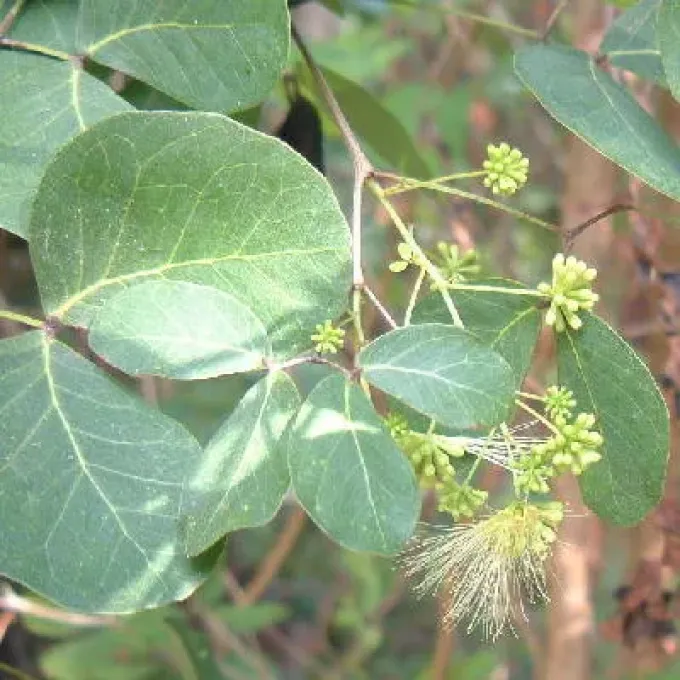
Botanically, it is recognized by its bipinnate leaves and sharp, paired spines at the base of the leaves, resembling the claws of a cat. The flowers are distinctive, featuring long, showy stamens that are typically yellow or pinkish.
The tree requires minimal maintenance once established, though occasional pruning is beneficial for shaping the canopy and encouraging dense growth in hedging applications.
Main diseases and pests
Common pests include scale insects and spider mites, which can accumulate on the foliage, particularly in areas with low humidity or poor plant vigor.
Root rot is the most serious threat, usually caused by overwatering or soil compaction that prevents adequate drainage around the base of the trunk.
To prevent disease outbreaks, it is crucial to avoid irrigation patterns that keep the soil waterlogged, especially in heavy clay or poorly draining substrates.
Regular monitoring for leaf spotting or discoloration is essential to catch fungal infections early before they spread to the vascular system of the tree.
Good agricultural hygiene, including the removal of dead or decaying wood, helps maintain the overall health of the tree and prevents pest colonization.