
Pimelea simplex
Pimelea simplex
Description
Growing requirements
Pimelea simplex, commonly known as the Desert Rice Flower, is a herbaceous species belonging to the Thymelaeaceae family. It is native to arid regions of Australia, where it has evolved to thrive in harsh, nutrient-poor soils under high thermal stress.
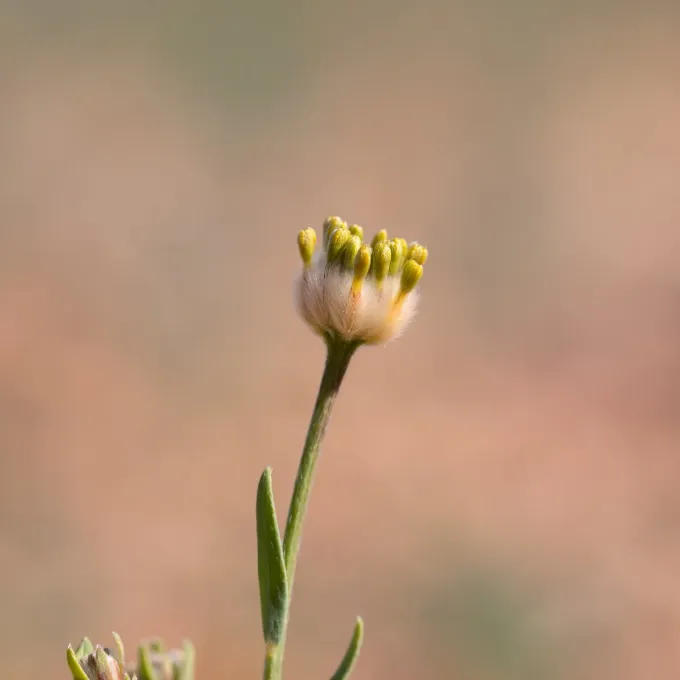
Botanically, the plant is characterized by a slender, erect stem and terminal clusters of small, pale flowers. These flowers are highly attractive to local pollinators, making the plant an integral part of the ecological balance in its native habitat.
The culture requires full sun exposure to maintain its compact growth habit. It is highly adapted to low-rainfall environments and does not tolerate high-humidity conditions, which often lead to physiological disorders and poor development.
Soil requirements focus on excellent drainage. Sandy or stony soils with a neutral pH are ideal. The plant does not require high levels of fertilization; in fact, excessive nitrogen application can lead to rapid, weak growth that makes the plant susceptible to mechanical damage.
Cultivation of Pimelea simplex is primarily ornamental. It is well-suited for xeriscaping projects where water conservation is a priority. Successful establishment depends on ensuring that the plant is not overwatered during its early growth stages.
Main diseases and pests
The primary threats to Pimelea simplex are root pathogens, specifically Phytophthora species, which thrive in waterlogged soils. Ensuring a fast-draining substrate is the most effective preventative measure against these deadly infections.
Insects such as aphids and spider mites are common pests that colonize the flower heads and tender shoot tips. These infestations can stunt growth and compromise the aesthetic value of the plant, especially in garden settings.
Fungal diseases like powdery mildew can occur during periods of high atmospheric humidity or poor airflow. Such conditions weaken the plant's cuticle and allow pathogens to penetrate the leaf tissue more easily.
Weed management is critical during the seedling phase, as the plant does not compete well with vigorous grasses. Hand-weeding is recommended, as the shallow root system is easily damaged by mechanical cultivation equipment.
Finally, environmental extremes, such as prolonged frost or unseasonable heatwaves during the flowering cycle, can result in poor seed set and premature senescence. Careful site selection is essential to mitigate these natural risks.