
Pink riceflower
Pimelea rosea
Description
Growing requirements
The Pink riceflower (Pimelea rosea) is a perennial shrub belonging to the Thymelaeaceae family. Native to the southwestern regions of Australia, it thrives in environments characterized by distinct seasonal patterns and well-drained soil compositions.
In terms of soil requirements, this species demands excellent drainage, as its root system is highly susceptible to root rot in waterlogged conditions. Sandy or gravelly soil mixtures are preferred to ensure that roots remain aerated and healthy throughout the growing season.
The plant requires full sun exposure to flourish and maintain its dense, compact habit. While it is adapted to the mild winters of its native range, it needs protection from heavy frost and excessively damp winters in regions where it is cultivated as an ornamental specimen.
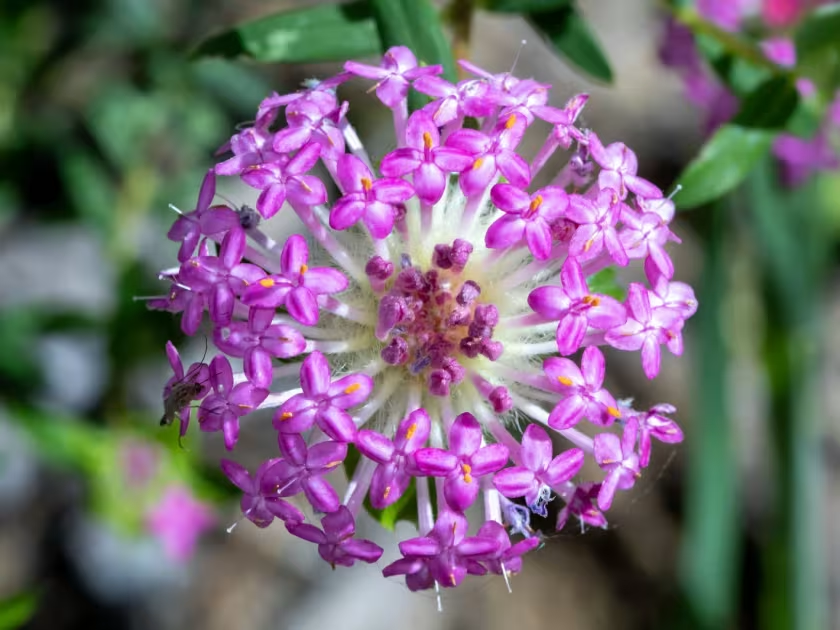
Botanically, Pimelea rosea is identified by its narrow, lanceolate foliage and its characteristic terminal flower heads. These clusters of small, delicate pink flowers create a striking visual impact, which is the primary reason for its popularity in horticultural circles.
Horticultural usage is primarily focused on aesthetic landscaping. It is frequently employed in xeriscaping or rock gardens, where its drought-tolerant nature, once established, makes it an excellent choice for low-maintenance, dry-climate garden designs.
Main diseases and pests
The primary threats to Pimelea rosea involve fungal pathogens caused by improper watering practices or poorly drained growing sites. Phytophthora root rot is particularly devastating and must be managed by ensuring strict drainage controls.
Pest management should focus on common garden insects like aphids and mites. These pests can cause significant damage to the floral displays and foliage, necessitating the use of sustainable pest control methods to maintain the health of the plant.