
Mongolian Pilea
Pilea mongolica
Description
Growing requirements
Mongolian Pilea (Pilea mongolica) is an herbaceous annual plant belonging to the Urticaceae family. The species is native to East Asia, including regions of Mongolia and China, where it thrives in shaded, moist forest environments and alongside riverbanks.
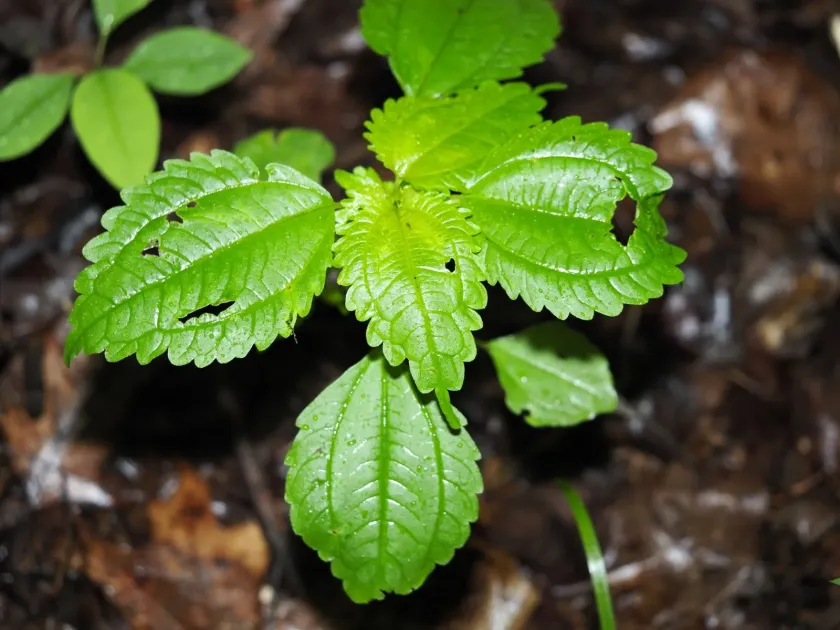
The plant is distinguished by its upright growth habit and thin, distinctively veined leaves. Unlike many other members of the nettle family, it does not possess stinging hairs, which makes it a notable, non-aggressive species within its botanical group.
Regarding climate requirements, the plant prefers temperate conditions with high ambient humidity. It is highly intolerant of direct, harsh sunlight and arid environments, making sheltered sites with filtered light or partial shade ideal for commercial or experimental cultivation.
The soil requirements emphasize the need for organic-rich, loamy, and loose substrates that maintain moisture while providing excellent drainage. Maintaining a balanced soil pH, ideally neutral to slightly acidic, is essential for optimal nutrient uptake by the root system.
In terms of agricultural utilization, Pilea mongolica is increasingly being studied for its phytomedicinal properties. Its biomass contains various secondary metabolites, making it an interesting candidate for natural antioxidant research and specific livestock fodder formulations.
Main diseases and pests
The primary threats to this crop include fungal infections such as powdery mildew and various leaf spot diseases, which typically develop if air circulation is poor or if excessive moisture accumulates on the leaf surfaces.
Pest management focuses primarily on controlling infestations of spider mites and aphids. These insects are particularly attracted to the soft, succulent tissues of the plant, especially when it is grown under sub-optimal, dry indoor or greenhouse conditions.