
Friendship plant
Pilea involucrata
Description
Growing requirements
The Friendship plant (Pilea involucrata) is a member of the Urticaceae family, native to the tropical rainforests of Central and South America. It is widely cultivated for its unique foliage and serves as a significant ornamental species in indoor horticulture.
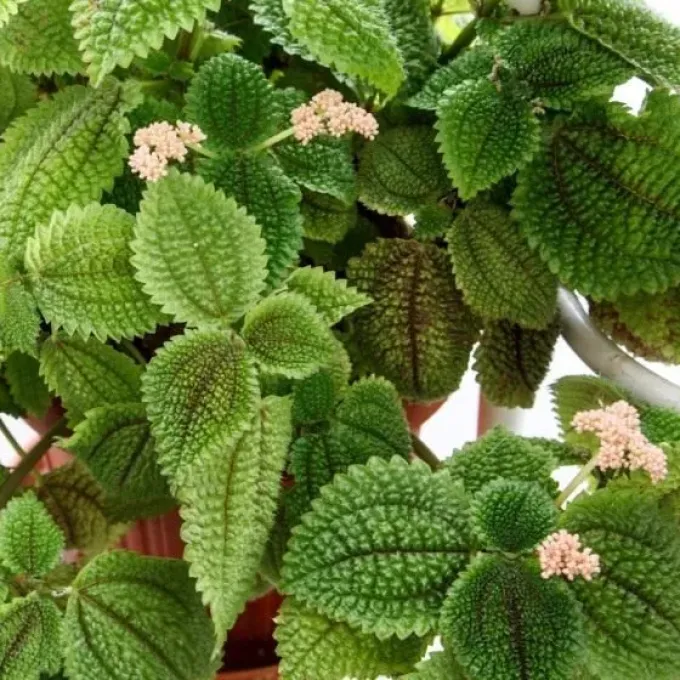
The plant features distinctively textured, crinkled leaves that are often dark green with bronze or purplish undertones. It grows in a compact, mounding habit, making it an excellent candidate for terrariums and indoor ground-cover landscaping in climate-controlled environments.
Regarding climate requirements, Pilea involucrata thrives in temperatures between 20°C and 25°C. It requires high humidity levels, often exceeding 60%, to mimic its native forest floor environment and prevent leaf crisping or curling at the edges.
The soil should be well-draining, nutrient-rich, and slightly acidic. A peat-based potting mix amended with perlite or pumice is recommended to ensure adequate gas exchange at the root level, which is essential for vigorous plant development.
Proper agronomic care involves maintaining consistent moisture levels. The plant should be watered when the surface of the soil begins to dry, but it is imperative to prevent waterlogging, as the species is highly susceptible to root system degradation due to oxygen starvation.
Main diseases and pests
The primary threats to crop health include fungal pathogens such as Pythium and Phytophthora, which cause root rot under waterlogged conditions. Pest pressure from spider mites and fungus gnats is common in indoor environments, requiring vigilance and appropriate environmental management.