
Philodendron wendlandii
Philodendron wendlandii Schott
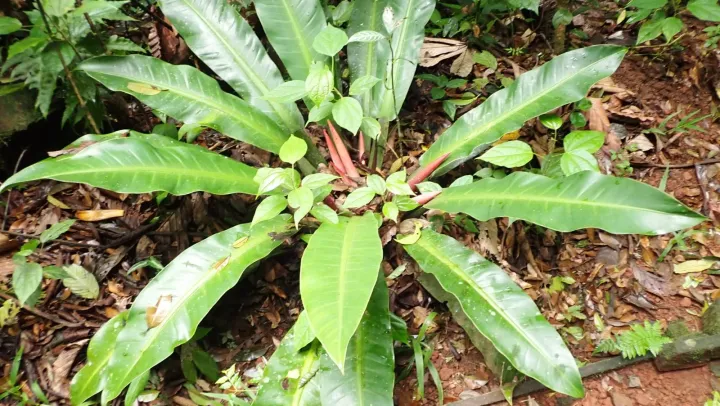
Description
Growing requirements
Philodendron wendlandii is a distinct member of the Araceae family, native to the tropical rainforests of Central America, specifically Costa Rica and Panama. It is highly regarded as an ornamental foliage plant due to its unique rosette growth habit.
The plant features thick, leathery, obovate leaves arranged in a dense crown, creating a structural and aesthetic focal point. In its natural habitat, it often grows as an epiphyte, deriving nutrients from decaying organic matter trapped in tree crotches.
Regarding climate, it thrives in warm temperatures between 20°C and 25°C. It is intolerant of cold drafts and temperatures below 15°C, which can cause significant stress, discoloration, or leaf drop, especially if combined with high humidity.
Soil requirements dictate a light, well-draining, and airy medium. A mixture consisting of orchid bark, peat moss, perlite, and charcoal is recommended to provide both moisture retention and essential oxygen exchange for the root system.
Bright, indirect light is necessary for healthy development. While it can tolerate lower light levels, excessive shade often results in slower growth rates and the loss of the plant's deep green coloration and structural integrity.
Main diseases and pests
The primary pests affecting Philodendron wendlandii are spider mites and scale insects. These pests often congregate on the undersides of the thick leaves or in the dense center of the rosette, making early detection difficult without regular inspection.
Root rot, typically caused by Pythium or Phytophthora species, is the most common disease associated with improper irrigation. Overwatering prevents roots from breathing, leading to tissue necrosis and the rapid decline of the entire plant.
Leaf spot diseases, characterized by brown or black lesions, may occur if the leaves remain wet for extended periods in low-ventilation environments. Ensuring proper spacing between plants helps maintain airflow and reduces the risk of fungal proliferation.
Integrated pest management involves physical removal of visible insects, wiping leaves with a mild soapy solution, and employing systemic insecticides if infestation persists. Prevention remains the most effective strategy for long-term health.
Maintaining a clean growing area and sterilizing tools used for pruning or propagation is essential to avoid the spread of pathogens. Always ensure the potting container has adequate drainage holes to prevent the accumulation of stagnant water.