
Split-leaf philodendron
Philodendron bipinnatifidum Schott ex Endl.
Description
Growing requirements
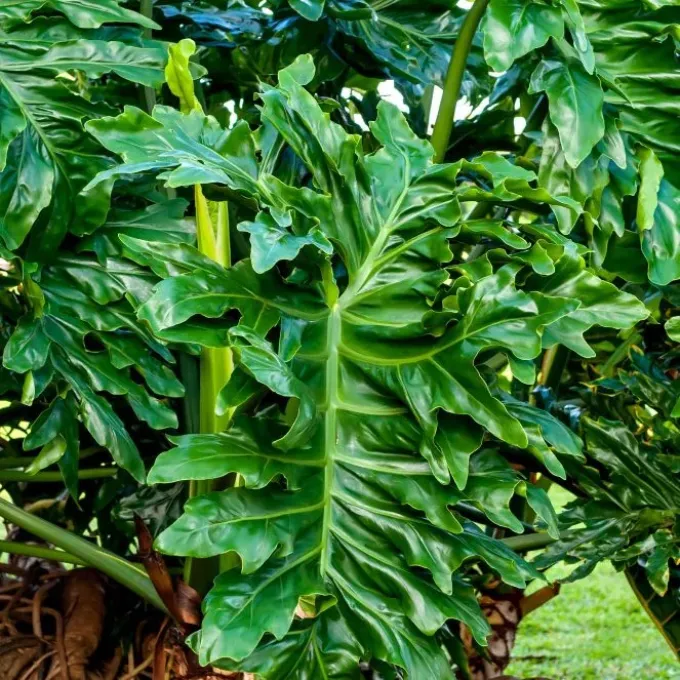
Split-leaf philodendron (Philodendron bipinnatifidum) is a prominent member of the Araceae family. Native to South American tropical forests, it is widely recognized for its deeply lobed, large, leathery leaves and tree-like growth habit.
The plant thrives in warm, humid conditions. It requires bright, indirect light to maintain its robust structure. Direct sunlight is detrimental, as it causes severe leaf scorch, particularly on younger, more delicate foliage.
Soil composition must be rich in organic matter, loose, and well-draining. A mix of peat moss, pine bark, and perlite provides an ideal environment that allows the roots to breathe while retaining necessary moisture.
Watering practices should balance consistency with drainage. Keeping the soil slightly damp but never waterlogged is essential to prevent root asphyxiation, which can occur very quickly in heavy, compacted soil types.
Humidity management is crucial for optimal health. Maintaining ambient humidity levels above 60% mimics the plant's natural habitat, resulting in larger, more vibrant leaves and a more resilient overall plant.
Main diseases and pests
Fungal root diseases are the most critical threat to Philodendron bipinnatifidum. These are typically the result of poor drainage or chronic overwatering, which creates a breeding ground for pathogens like Pythium.
Spider mites are common pests in greenhouse conditions. They thrive in dry, stagnant air, creating small webs on the underside of leaves and draining the chlorophyll, which leaves the foliage appearing mottled and dull.
Scale insects can be persistent, adhering to stems and veins. These pests protect themselves with a hard, waxy shell, making them resistant to contact sprays and requiring systemic treatments for effective control.
Mealybugs are another concern, often appearing in leaf nodes and joints. Their presence can lead to sooty mold growth due to the honeydew they excrete, further compromising the plant's photosynthetic capacity.
Integrated Pest Management (IPM) practices should be followed by regularly cleaning leaves and monitoring the environment. Early detection and isolation of infested plants are key strategies to prevent the spread of pests.