
Phanera macrostachya
Phanera macrostachya
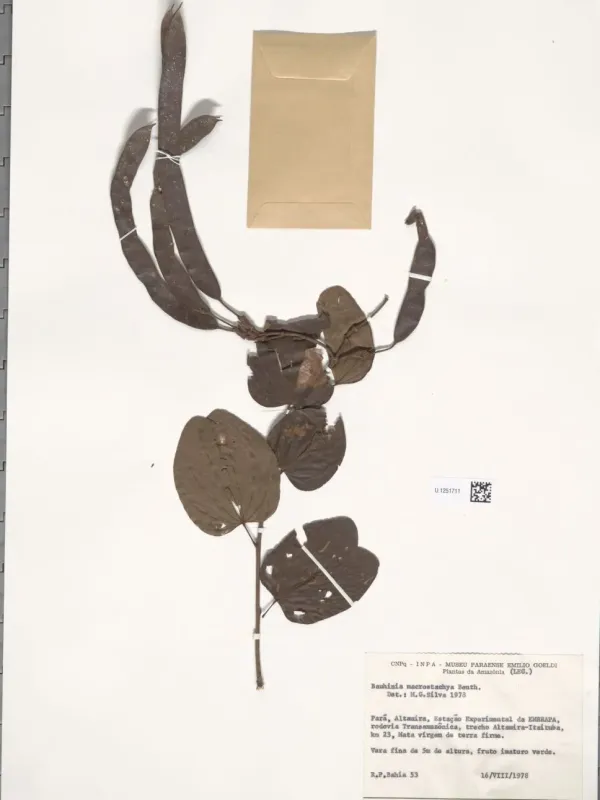
Description
Growing requirements
Phanera macrostachya is a woody climber belonging to the Fabaceae family, commonly found in tropical habitats. This plant is known for its vigorous growth habits and specialized morphological adaptations, allowing it to climb and thrive within dense vegetation zones.
Regarding soil requirements, the species performs optimally in well-drained, nutrient-rich soils. A loamy texture is generally preferred, as it balances water retention with sufficient aeration for root health, preventing the common issue of root rot in tropical environments.
The climate must be tropical or subtropical, characterized by high year-round temperatures and substantial precipitation. As an indigenous species of tropical ecosystems, it is highly sensitive to cold stress and cannot survive in environments with frost or significant seasonal temperature drops.
Agronomic management of Phanera macrostachya focuses on providing adequate structural support for the vines, which is essential for maximizing biomass production. Regular soil management, including mulching and nutrient replenishment, ensures steady development of the foliage and stems.
The economic and practical usage of this crop includes its ornamental value in tropical landscape architecture and ongoing research into its phytochemical properties. Its ability to sequester carbon and produce significant biomass makes it a plant of interest in agroforestry systems.
Main diseases and pests
The primary threats to this plant are fungal pathogens that thrive in humid tropical conditions. These infections often manifest as leaf spots or stem cankers, which can severely compromise the plant's structural integrity if not managed through proper air circulation and spacing.
Pests, particularly aphids and scale insects, pose a recurring problem by feeding on the sap of young shoots. This feeding habit not only drains the plant of energy but can also introduce secondary pathogens, leading to stunted development and leaf distortion.
Root-knot nematodes are also a potential threat, especially in soils that have been continuously cropped without proper rotation. These pests target the root system, inhibiting nutrient uptake and making the plant vulnerable to environmental stressors.
Integrated Pest Management (IPM) is recommended to maintain plant health. This includes the use of organic deterrents and the encouragement of natural predators within the cultivation area, which helps keep pest populations below the economic threshold.
Regular sanitation, such as removing infected plant debris and pruning damaged branches, is crucial for limiting the spread of diseases. A proactive approach to plant health is the most effective way to ensure consistent yields and plant longevity.