

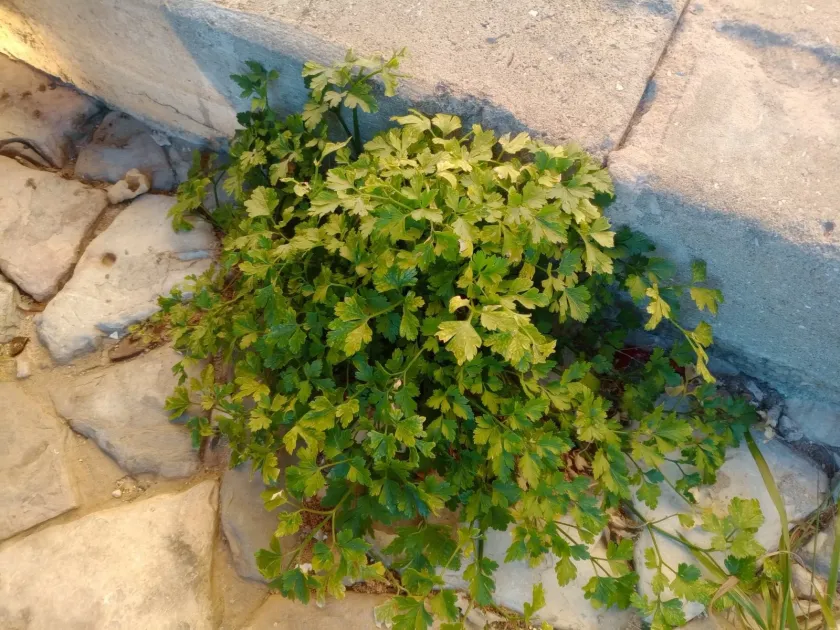
Description
Sowing dates
Root parsley is a biennial herbaceous plant belonging to the Apiaceae family. During its first year, it develops a rosette of leaves and a fleshy taproot, while in the second year, it produces a flowering stem and seeds.
Sowing times are heavily dependent on the climate, as root parsley is cold-hardy. Seeds start germinating in soil temperatures as low as +2°C to +3°C, and young seedlings can tolerate light frosts down to -7°C.
In temperate climates, sowing is typically done as early as possible in spring, usually in April. Winter sowing is also an option, performed in late autumn to allow seeds to germinate early in the following season.
The seeds should be planted at a depth of 1.5 to 2 cm. Because they contain essential oils that delay germination, pre-soaking seeds or using pelleted seeds is recommended to achieve more uniform emergence.
Proper spacing is crucial for taproot development. Rows should be spaced 20 to 30 cm apart, with individual plants thinned to 5 to 8 cm within the row to ensure they have enough space to reach their full potential size.
Growing requirements
Root parsley demands fertile, deep, and well-structured soil. Ideally, it should be grown in light sandy loam or loamy soils with a neutral pH, which prevents root deformation and ensures a smooth surface texture.
Moisture management is key; the crop requires consistent water supply, especially during the stage of active root development. Drought stress causes the roots to become woody, bitter, and significantly lower in quality.
Full sun is essential for this crop. Partial shade or overcrowding can lead to poor leaf development and smaller roots, making the plant more susceptible to fungal infections due to trapped moisture.
Crop rotation is mandatory to maintain soil health. It should not follow other members of the Apiaceae family, such as carrots, celery, or dill, to avoid the buildup of common soil-borne pathogens and specific pests.
Soil preparation should include adding well-rotted organic matter in the autumn. Fresh manure must be avoided as it encourages lateral root branching and leads to poor-quality, unattractive taproots.
Yield
Yield depends on meticulous care throughout the growing season. Under good management, a harvest of 20 to 40 tons per hectare is achievable depending on the variety and local environmental conditions.
Timely thinning is the most important factor for achieving high-quality yields. If plants are too crowded, they will compete for nutrients and light, resulting in underdeveloped or stunted taproots that have little commercial value.
Weed control is vital, especially during the slow early growth phase. Regular cultivation between rows helps keep the soil aerated, which promotes proper root expansion and prevents surface waterlogging.
Fertilization should focus on phosphorus and potassium to support root growth. Excessive nitrogen should be avoided as it stimulates excessive foliage growth, which takes energy away from the development of the taproot.
A high-quality root parsley crop consists of uniform, straight roots free of rot or scars. Choosing high-yield cultivars adapted to the local region is a fundamental step for any successful commercial producer.
Main diseases and pests
The carrot rust fly is the most significant pest. Larvae bore into the taproot, creating tunnels that facilitate rot and make the product unsellable, which is a major concern for both field and storage quality.
Fungal diseases like white rot and powdery mildew are common in wet conditions. White rot is particularly dangerous during storage, where it can spread rapidly through a pile of roots if ventilation is inadequate.
Powdery mildew appears as a white coating on the leaves, reducing the plant's ability to photosynthesize. Severe outbreaks can significantly stunt growth and lead to lower yields if not addressed promptly.
Prevention strategies involve strict crop rotation, weed management, and the use of healthy, treated seeds. Ensuring good field drainage and spacing also helps create an environment less favorable for disease development.
- Use certified disease-resistant seed varieties.
- Implement proper physical barriers or netting against insect pests.
- Remove and destroy all crop residues immediately after harvest.
- Practice integrated pest management (IPM) to reduce chemical reliance.
Harvesting
Harvesting usually takes place in October before hard frosts occur. The roots should be carefully lifted from the soil using a garden fork to minimize bruising or breaking, which would compromise shelf life.
After lifting, allow the roots to dry briefly if the weather permits. Trim the foliage, leaving a short stump of 1 to 2 cm, ensuring that the crown of the root remains undamaged to prevent disease entry points.
For storage, sort the harvest strictly. Only clean, healthy roots should be stored. Any damaged, deformed, or diseased roots should be processed immediately rather than kept in long-term storage.
Optimal storage conditions involve high humidity and temperatures just above freezing (0°C to 2°C). Storing in sand or ventilated crates helps maintain root turgor and prevents cross-infection of storage diseases.
Root parsley is highly valued in the culinary world for its unique aromatic profile. It serves as a nutritional base for soups, stews, and roasted vegetable dishes, providing essential vitamins and minerals.
Content graph
Connections · Root parsley
Most often together:
Nutrient elements
1 contact
Marketplace
Products · 42
