
Curly parsley
Petroselinum crispum (Mill.) Nym. ex A.W. Hill ssp. crispum
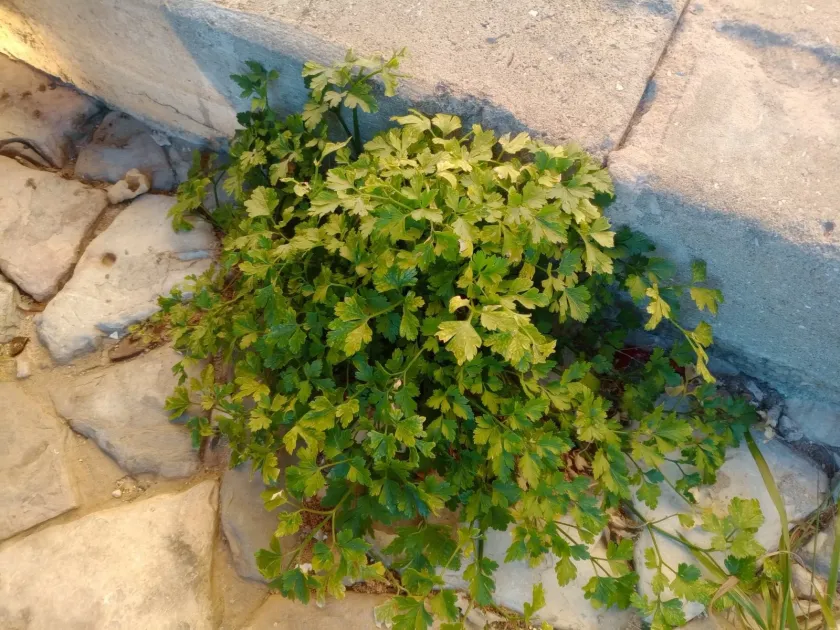
Description
Sowing dates
Curly parsley (Petroselinum crispum) is a biennial herb belonging to the Apiaceae family. It is widely cultivated for its decorative, curled leaves that serve as both a flavorful herb and a popular garnish in culinary arts.
Sowing in open ground should occur in early spring as soon as the soil reaches a temperature of about 3 to 5 degrees Celsius. Because the seeds are rich in essential oils, they have a thick coat that necessitates early sowing to ensure consistent germination.
For earlier harvests, gardeners often practice autumn sowing before the ground freezes. This allows the seeds to benefit from early spring moisture, resulting in faster establishment compared to those sown after the last frost.
The seeds should be sown in rows spaced approximately 20 centimeters apart at a depth of 1.5 to 2 centimeters. Ensuring proper seed-to-soil contact is crucial for success, especially in drier climates where moisture retention is a challenge.
In controlled environments or greenhouses, continuous sowing every few weeks ensures a steady supply of fresh leaves. This method is highly effective for market growers aiming to meet constant demand throughout the season.
Growing requirements
Curly parsley thrives in well-drained, fertile soil rich in organic matter. While it prefers a neutral pH, it is somewhat adaptable to different soil types, provided they are not excessively compacted or prone to waterlogging.
The crop is hardy and prefers cooler temperatures for optimal leaf development. The ideal growing range is between 16 and 20 degrees Celsius; higher temperatures often lead to premature flowering, known as bolting, which negatively affects quality.
Regarding light, curly parsley performs best in full sun but can tolerate partial shade. In shaded conditions, the leaves may become thinner and lighter in color, reducing their aesthetic appeal and market value.
Water management is vital; the soil should remain consistently moist but never saturated. Irregular watering often leads to stress, which stunts growth and makes the plant more susceptible to fungal diseases.
Fertilization should be balanced. Excessive nitrogen can lead to rapid growth that lacks flavor and makes the plant prone to pests, while a lack of nutrients results in stunted, yellowing foliage that is unsuitable for harvest.
Main diseases and pests
Leaf spot diseases, such as Septoria, are common threats, especially in humid conditions. These manifest as dark brown spots on the foliage, which can quickly ruin the quality of the harvested crop.
Rust is another fungal issue that presents as orange-brown pustules on the undersides of the leaves. Managing humidity and ensuring proper spacing between plants is the best way to prevent the spread of such infections.
The carrot fly is a significant pest for parsley, as its larvae feed on the roots. This damage leads to wilting and death, making it essential to use physical barriers or companion planting to deter the adult insects.
Aphids can also colonize the plant during hot, dry spells, weakening it by sucking sap. Early detection and the use of insecticidal soaps or biological controls are standard procedures for maintaining plant health.
- Practice crop rotation, avoiding locations previously occupied by other Apiaceae species.
- Remove plant debris promptly at the end of the season to reduce inoculum.
- Monitor the crop frequently for signs of wilting or discoloration to enable early intervention.
Harvesting
Harvesting usually begins 60 to 80 days after sowing. The most common method involves clipping the outer, well-developed leaves at the base, which encourages the plant to continue producing new foliage from the center.
For fresh market sales, leaves are harvested in the early morning to ensure maximum turgor. The aesthetic quality of curly parsley depends on the depth of the green color and the complexity of the leaf curling.
Once harvested, the bunches should be sorted to remove any damaged or yellowed leaves. Rapid cooling to 0 degrees Celsius is recommended to preserve freshness and extend the shelf life for up to two weeks.
Mechanized harvesting is possible for large-scale operations, though hand-harvesting remains the standard for high-quality, fresh-cut bunches. Careful handling is necessary to prevent bruising the delicate foliage.
If not sold fresh, the leaves can be air-dried or frozen. Freezing is often preferred for preserving the essential oils that give parsley its distinct aroma, ensuring it retains its culinary utility throughout the year.