
Pedicularis verticillata
Pedicularis verticillata
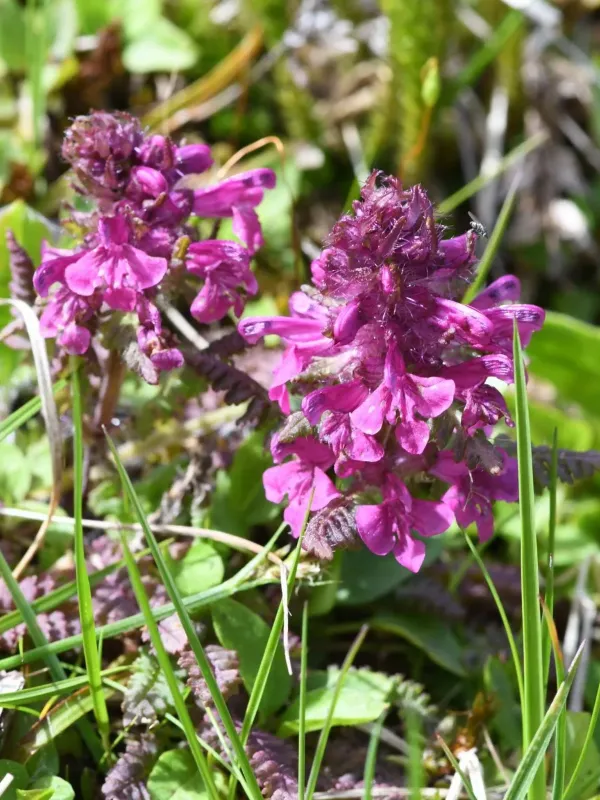
Description
Sowing dates
Pedicularis verticillata is primarily a wild perennial species, and therefore it is not typically grown as a conventional agricultural crop.
The seeds require natural cold stratification to break dormancy, which occurs during the winter months in their native mountainous habitats.
Successful propagation depends on the presence of compatible host plants, as Pedicularis species are hemiparasitic and require root connections to survive.
Sowing should be performed in late autumn, allowing the seeds to undergo natural climate cycles before germinating in the spring.
Artificial cultivation efforts require specialized soil substrates that mimic natural alpine conditions, ensuring both moisture and root availability.
Growing requirements
This species belongs to the Orobanchaceae family and is adapted to subalpine and alpine environments with high light intensity.
The ideal soil conditions include well-drained, nutrient-rich, and slightly acidic to neutral soils that retain consistent moisture without becoming waterlogged.
As a hemiparasite, Pedicularis verticillata must be cultivated alongside host plants, such as specific grasses or sedges, to establish necessary haustorial connections.
The climate requirements include cool summers and high humidity levels, typical for high-altitude zones where this plant flourishes.
It performs poorly in shaded or overly competitive environments, necessitating open spaces where it can access direct sunlight without excessive obstruction.
Yield
Yield metrics for Pedicularis verticillata are not standardized, as the plant is not cultivated on an industrial scale for agricultural output.
In natural settings, biomass production is limited by the short growing season and the complex energy transfer from host plants to the parasite.
Sustainable harvesting of medicinal components is focused on wild-crafted populations rather than intensive farming, prioritizing the long-term health of the ecosystem.
Biological efficiency depends on the strength of the parasitic bond between the Pedicularis and the surrounding host vegetation.
Future potential for yield improvement rests on understanding the specific host plant requirements and optimizing the density of these associations in controlled environments.
Main diseases and pests
Fungal pathogens such as powdery mildew and rusts are common threats, especially when air circulation is poor and humidity levels are excessively high.
Insect pests, particularly lepidopteran larvae, can cause significant damage by consuming the foliage and reproductive structures during the active growing season.
Root damage caused by soil nematodes can impair the plant's ability to parasitize its host, ultimately leading to stunted growth or plant death.
Habitat disturbance due to overgrazing is a significant threat, as trampling can physically destroy the plants and disrupt the delicate soil-root ecosystem.
- Powdery mildew
- Rust fungi
- Lepidopteran larvae
- Soil nematodes
Harvesting
The aerial parts of the plant are harvested during the peak flowering stage to ensure maximum concentration of bioactive compounds.
Careful cutting of the stems ensures that the base of the plant remains intact, allowing for potential regrowth in subsequent seasons.
Proper post-harvest processing involves rapid drying in a shaded, well-ventilated area to prevent degradation of active ingredients.
It is crucial to avoid over-harvesting from any single location to ensure that sufficient seed production occurs for future population regeneration.
Storage should be conducted in paper bags or breathable containers, kept in cool, dry conditions away from light to maintain high product quality.