
Fern-leaved lousewort
Pedicularis aspleniifolia
Description
Growing requirements
Fern-leaved lousewort (Pedicularis aspleniifolia) is a perennial herbaceous plant belonging to the Orobanchaceae family. As a member of the Pedicularis genus, it functions as a hemiparasite, meaning it derives partial nutrition from the roots of neighboring vegetation through specialized structures called haustoria.
The native range of this species is primarily centered in the mountainous regions of Central Europe, specifically the Alps. It thrives in alpine and subalpine meadows, where it occupies niches that provide consistent moisture and stable climatic conditions throughout the growing season.
Cultivation requirements are strict, as the plant depends on the presence of specific host species to complete its life cycle. Soil should be moist and nutrient-rich, with a slightly acidic profile common to alpine meadow environments to ensure the plant's health and vigor.
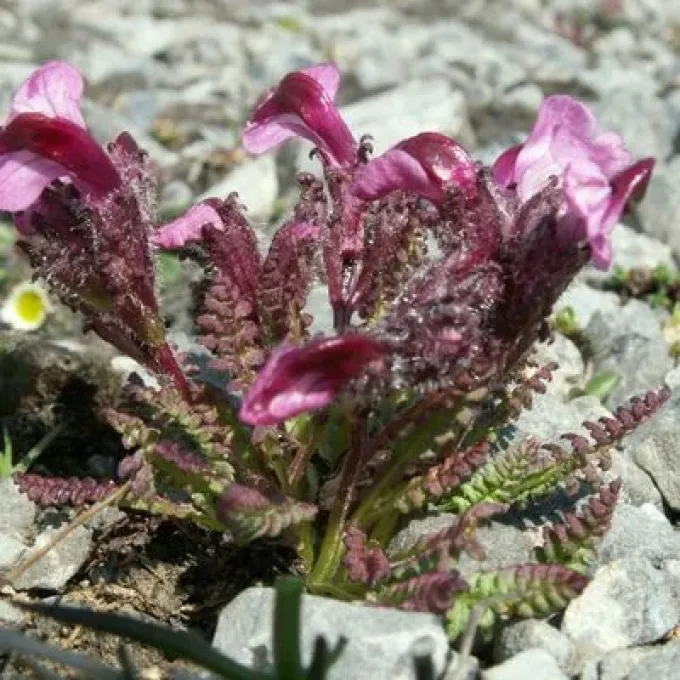
Botanically, the species is distinguished by its finely dissected, fern-like foliage, which provides its common name. The plant typically grows to a moderate height and produces vibrant, structurally complex flowers designed to attract specific pollinators, such as bumblebees.
In terms of management, this species is not considered a traditional agricultural crop. Efforts are generally focused on conservation biology to maintain the genetic diversity of alpine flora rather than large-scale agricultural production due to the plant's sensitive ecological needs.