
Pedicularis apodochila
Pedicularis apodochila
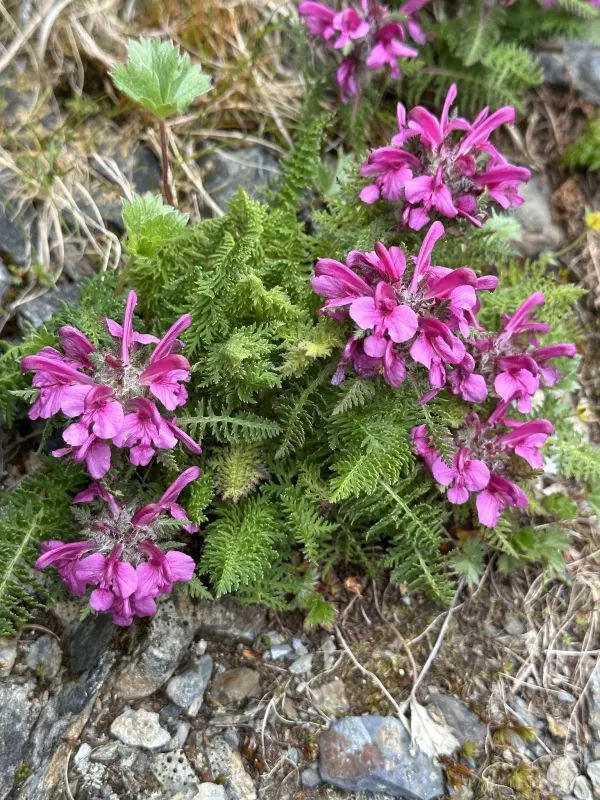
Description
Growing requirements
Pedicularis apodochila is a perennial herbaceous plant belonging to the Orobanchaceae family. As a semi-parasite, it derives a portion of its water and nutrients from the roots of surrounding plants, which is a key adaptation for its survival in nutrient-poor alpine soils.
The plant originates from specific mountain ecosystems where it thrives in subalpine meadows. Its distribution is closely tied to the presence of compatible host species, as it cannot complete its life cycle in isolation.
Climate requirements include cool, humid conditions and a short but intense growing season. The plant is adapted to withstand significant temperature fluctuations and high UV exposure common in mountainous altitudes.
Soil requirements focus on high organic content and excellent drainage. The plant typically avoids compacted, waterlogged soils, preferring the loose, gravelly textures found on slopes where mountain drainage is optimal.
Agricultural management is extremely complex due to its parasitic dependency. It is generally not cultivated as a crop; rather, its growth is managed in conservation settings to maintain population stability within protected habitats.
Main diseases and pests
Primary threats to this species include habitat loss due to land development and changes in land-use practices that reduce the density of host vegetation in the region.
Fungal pathogens represent the most common disease risk. Damp, cool conditions facilitate the growth of pathogens that can lead to crown rot and systemic infections in susceptible populations.
Pests such as aphids and specialized leaf-miners can cause significant stress to the plant during the early stages of the flowering season, reducing the overall reproductive success.
Invasive plant species can outcompete the hosts that Pedicularis apodochila depends on, creating a negative ripple effect that leads to a decline in its population.
Climate change poses a long-term threat, as shifting vegetation zones may displace the specific host species required for the continued existence of this unique parasitic plant.