
Pedicularis atropurpurea
Pedicularis atropurpurea
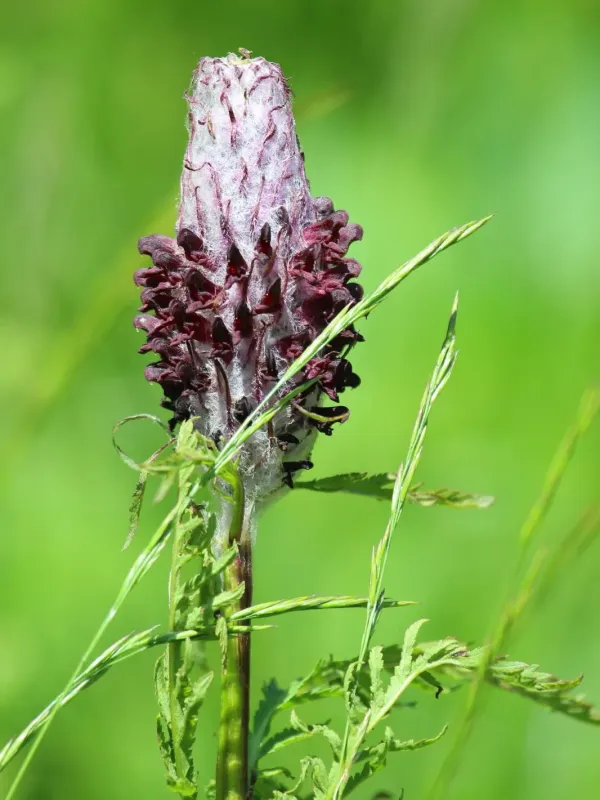
Description
Growing requirements
Pedicularis atropurpurea is a distinct species belonging to the Orobanchaceae family. As a perennial herbaceous plant, it is recognized for its hemiparasitic nature, which allows it to thrive in nutrient-poor high-altitude soils by tapping into the root systems of neighbors.
The plant originates from the mountainous regions of Central Asia. Its natural habitat consists of alpine meadows and slopes where moisture is constant, and the air temperature remains relatively cool throughout the vegetation season.
Regarding soil requirements, this species demands a well-aerated, humus-rich substrate. A key botanical feature is the presence of haustoria, which must establish a connection with a host plant, such as various grasses or sedges, for the organism to complete its life cycle.
Climate conditions are critical for its survival. Pedicularis atropurpurea is adapted to intense ultraviolet radiation typical of high altitudes and requires significant temperature fluctuations between day and night for proper development.
Agronomic management must prioritize maintaining the stability of the surrounding plant community. Any significant disruption to the host plants will lead to the decline of the Pedicularis population, as it cannot exist as a purely independent organism.
Main diseases and pests
The primary threats to Pedicularis atropurpurea are climate change and habitat degradation. Rising temperatures in alpine regions force the plant to move to higher elevations, where space and available host plants may be limited.
Root rot caused by stagnant water is a major physiological threat. When grown in artificial conditions, excessive soil humidity without proper drainage allows pathogenic fungi to destroy the delicate root architecture.
Pests such as certain species of aphids and specialized butterfly larvae can cause significant damage to the floral spikes. This herbivory significantly reduces the plant's ability to produce viable seeds.
Overgrazing is another critical threat that ruins the symbiotic balance of the meadow ecosystem. Livestock not only consume the foliage but also compact the soil, hindering the root system's ability to access the host plant.
- Monitor soil moisture levels frequently.
- Control invasive weeds that may outcompete the host plants.
- Avoid chemical fertilizers that disrupt the delicate parasitism balance.