
Tuberous lousewort
Pedicularis tuberosa
Description
Growing requirements
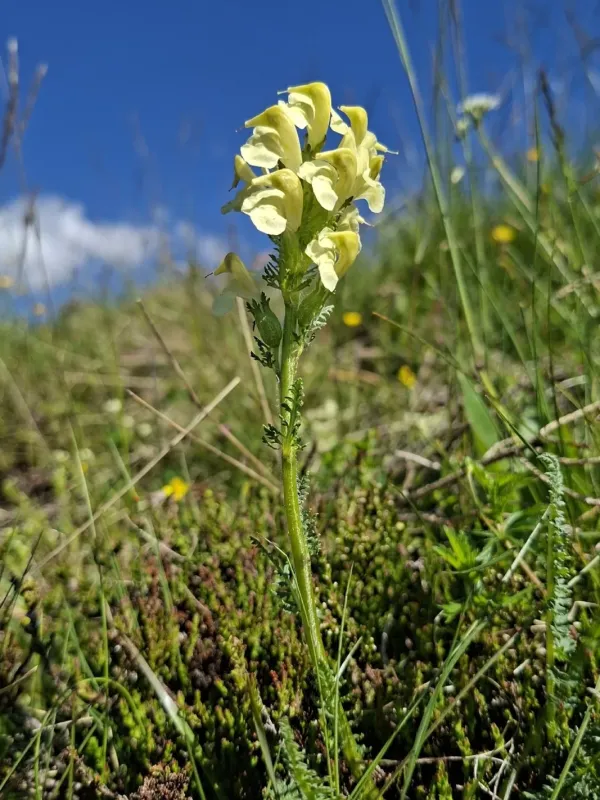
Tuberous lousewort (Pedicularis tuberosa) is a perennial herbaceous plant belonging to the Orobanchaceae family. It is a specialized species native to high-altitude alpine and subalpine zones.
The plant is classified as a hemiparasite. It survives by using its root system to penetrate the roots of surrounding flora, primarily grasses, through specialized structures called haustoria to extract nutrients.
Geographically, it is primarily distributed across the mountainous regions of Europe, including the Alps and the Pyrenees. It thrives in well-drained soil on open, sunny slopes where competition for light is limited.
The species has adapted to extreme mountain climates characterized by long, cold winters and short growing seasons. Its metabolic processes are calibrated to rapid development once the snow melts.
Soil requirements focus on acidity and drainage. It performs best in rocky, lean soils that are typical of mountain ridges and meadows, avoiding waterlogged sites where its root associations might suffer.
Main diseases and pests
Climate change poses a significant threat to Tuberous lousewort, as warming temperatures allow lowland vegetation to migrate upwards, displacing native alpine plant communities.
Fungal infections are generally rare in the harsh alpine environment; however, prolonged damp conditions can promote stem and root rot, particularly in less exposed locations.
Insect herbivory is a potential threat, with various larvae and specialized insects occasionally feeding on the foliage, impacting the plant's photosynthetic capacity.
Intensive livestock grazing in alpine regions can lead to trampling, which damages the delicate connection between the lousewort and its host plants, potentially killing the parasite.
Habitat fragmentation remains a long-term risk, as the plant relies on stable, diverse alpine meadows to maintain the necessary density of host plants for its survival.