
Pedicularis trichoglossa
Pedicularis trichoglossa
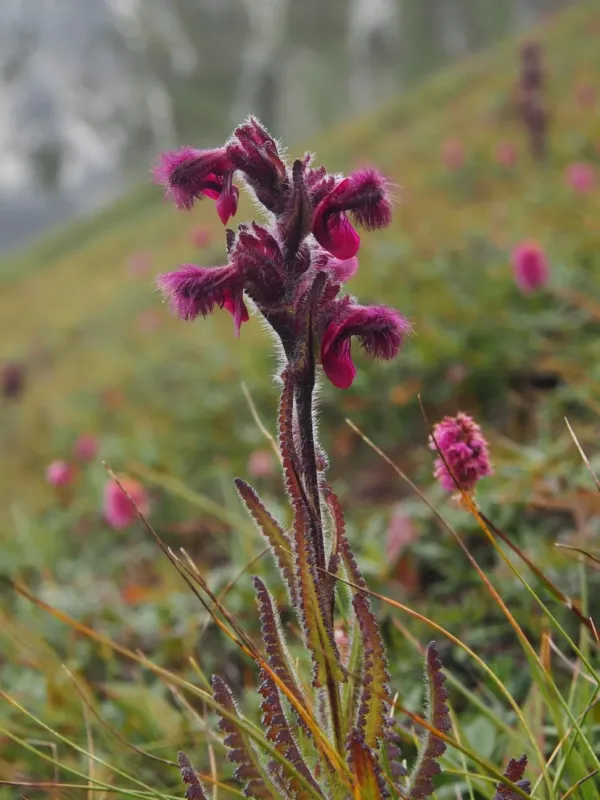
Description
Growing requirements
Pedicularis trichoglossa belongs to the Orobanchaceae family and is recognized as a hemiparasitic perennial herb. This plant has evolved to thrive in high-altitude meadows, primarily across Asian mountainous regions.
As a hemiparasite, it develops specialized root structures called haustoria. These allow the plant to tap into the vascular systems of host plants to extract water, nutrients, and essential minerals from the soil environment.
The plant requires a specific alpine or sub-alpine climate characterized by cool temperatures and significant seasonal variation. It is not considered an agricultural crop and does not have established cultivation practices for human use.
Its soil preference leans towards well-drained, nutrient-poor substrates where the plant's parasitic adaptations provide a distinct competitive advantage over non-parasitic neighbors.
Botanically, it is defined by its characteristic hairy bracts and zygomorphic flowers. These structures are adaptations to high-altitude pollination by specific insect species capable of reaching the nectar.
Main diseases and pests
Pathogenic threats include various fungal infections, such as rusts and mildews, which can thrive in the high-humidity microclimates of the mountain slopes where the plant resides.
Insects that specialize in feeding on floral tissues can impact the plant's reproductive success. These herbivores may consume developing seeds, effectively reducing the genetic dispersal for the next generation.
Environmental degradation, often caused by overgrazing in high-altitude pastures, remains a significant threat. Trampling by livestock can physically damage the delicate root-host connections.
Climate change poses a long-term risk by altering the timing of snowmelt and precipitation, which are critical for the life cycle of Pedicularis species in mountain ranges.
Root rot is a potential concern if the soil remains waterlogged for extended periods, especially in areas with poor natural drainage or during unusual weather events.